
An old Kashmiri home remedy
In Kashmir, garlic has never been just a kitchen ingredient. For generations, elders in our villages have also rubbed crushed garlic on scalp patches, small wounds and skin problems, usually on the advice of a hakim, or simply as a remedy passed down in the family. This is a real, lived practice, not something written for marketing — many families here still remember someone doing this. We want to talk about this old practice honestly, along with what science actually says today, because both the family tradition and the facts deserve respect — and neither should be made bigger than it really is.
Kaleem Teli's story
Kaleem Teli told us that as a child, he had a patch-like mark on his head and lost hair in that one spot. His family took him to a hakim, who told him to apply garlic on the area. In his own words, the hair on that patch never grew back, but the hair loss stopped spreading further, and he still carries that mark today. We are sharing this exactly as he told it to us. It is one person's real experience, not a guaranteed result — his patch did not fully recover, and we think that honest part of the story matters too.

Farooq Dar's story
Farooq Dar told us he developed a white patch on his cheek. After hearing that garlic could help with this kind of problem, he applied it on the patch himself. According to him, over a few months the patch cleared and his beard slowly grew back there, though it took about a year to grow back fully. This is also his personal account, in his own words. We cannot confirm the exact medical cause behind his patch, and we are not saying garlic will work the same way for everyone.
What the research actually says
Now, the science, honestly. There is one proper clinical study on this, published in the Indian Journal of Dermatology, Venereology and Leprology, on patients with alopecia areata — an autoimmune condition that causes round patches of hair loss. In the study, one group applied garlic gel along with a corticosteroid cream, and another group used only the corticosteroid cream. After three months, the garlic-plus-steroid group showed a clearly better result than the steroid-alone group.[1] We want to be precise here: this study tested garlic added to a medical corticosteroid cream, not garlic used alone, and it involved a small group of about 40 patients, with one specific condition — alopecia areata. It is real, peer-reviewed research, and it does show garlic can add some real benefit alongside medical treatment — but it is not proof that garlic alone cures or treats any type of hair loss or baldness.
Why garlic may help in the first place
Garlic has allicin, a compound formed when a clove is crushed or cut. Lab studies have found allicin can fight fungus and bacteria, including some fungal infections known to cause patchy hair loss and scalp problems, like ringworm on the scalp. This may be part of why an old remedy like this could genuinely help in some scalp or skin infections. But most of this evidence comes from lab testing, not large trials on real patients. Dermatologists also warn that applying raw garlic directly on skin can cause irritation, burns or rash in some people, which can make a skin problem worse instead of better. The science behind it is real, but it does not prove raw garlic will safely help every scalp or skin patch.
Where the claim is true, and where it isn't
To be fully honest: garlic does have a real antimicrobial compound, and one proper clinical study did find garlic gel added a measurable benefit for alopecia areata patients when used with medical treatment. It is also true that our community has used garlic on scalp and skin problems for generations, and some people, like Kaleem and Farooq, feel it genuinely helped them. What is not proven is that garlic alone regrows hair on a bald patch, cures baldness, or works the same way for every person and every type of hair loss. Hair loss can have many causes — autoimmune, fungal, hormonal, nutritional or stress-related — and garlic has not been shown to fix all of these. We are not going to call it a miracle cure, because that would not be honest.
How it's traditionally used, and how to be careful
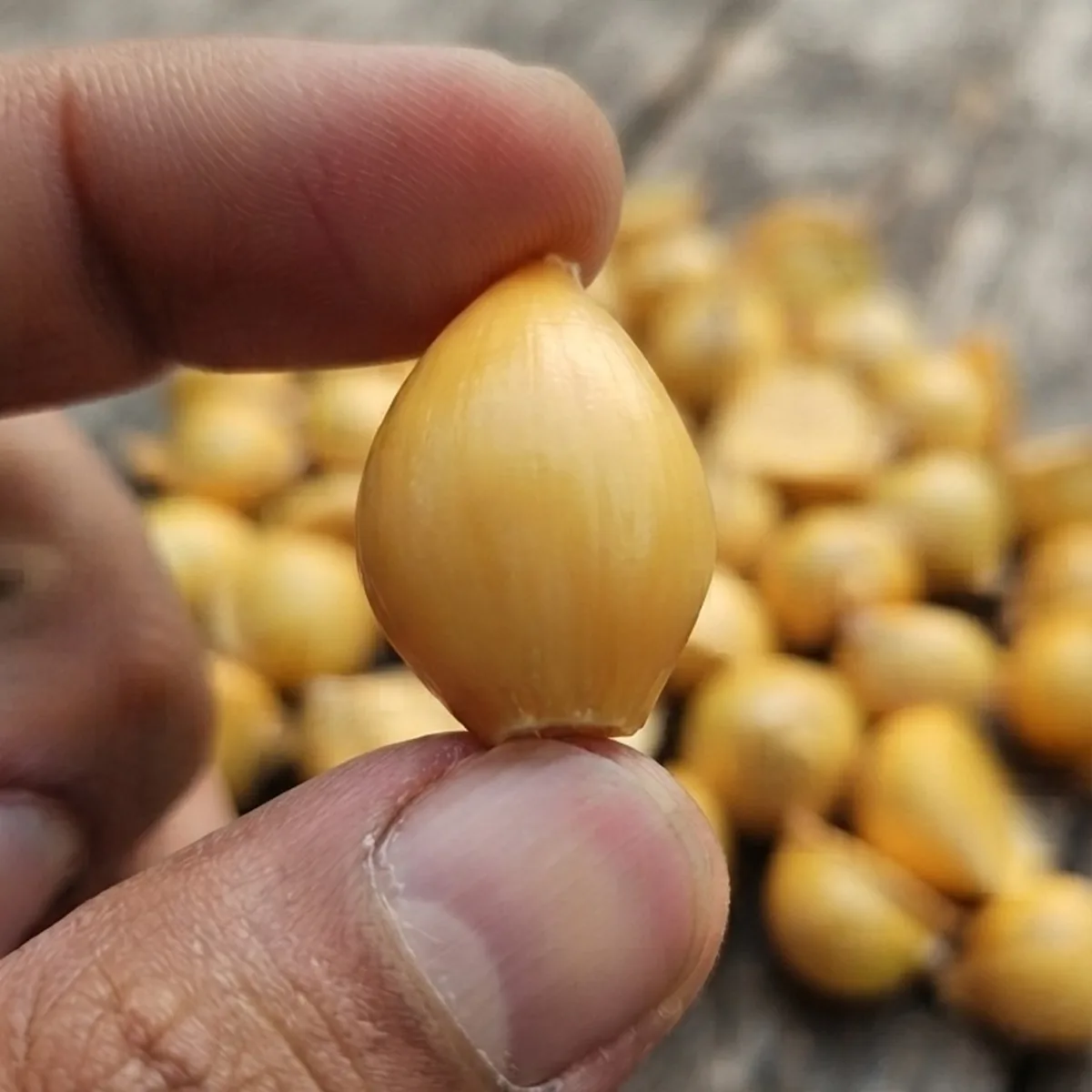
In Kashmir, a clove or two of garlic is usually crushed and rubbed gently on the affected patch, sometimes with a little oil, once a day, repeated for weeks or months — the way Kaleem and Farooq both described. Our whole, unpeeled Kashmiri Mountain Garlic (Ek Pothi Lehsun) is the same single-clove variety used in this traditional practice. If you want to try it, be careful: test a small amount on a small patch of skin first, since raw garlic can cause burning or irritation in some people; do not apply it on broken or bleeding skin; and stop right away if you see redness, pain or a rash. If you have a hair patch or skin patch that is spreading, itching a lot, or not improving, please see a dermatologist for a proper check-up — patches like this can have different causes that need different treatment. Garlic is not a replacement for medical care.
A quick, honest note
This article shares a traditional practice and published research; it is not medical advice, and this garlic is not a medicine. It is not meant to diagnose, treat, cure or prevent alopecia, baldness or any other medical condition. If you have unexplained or worsening hair loss, or any skin condition, please see a qualified dermatologist rather than relying only on a home remedy.