
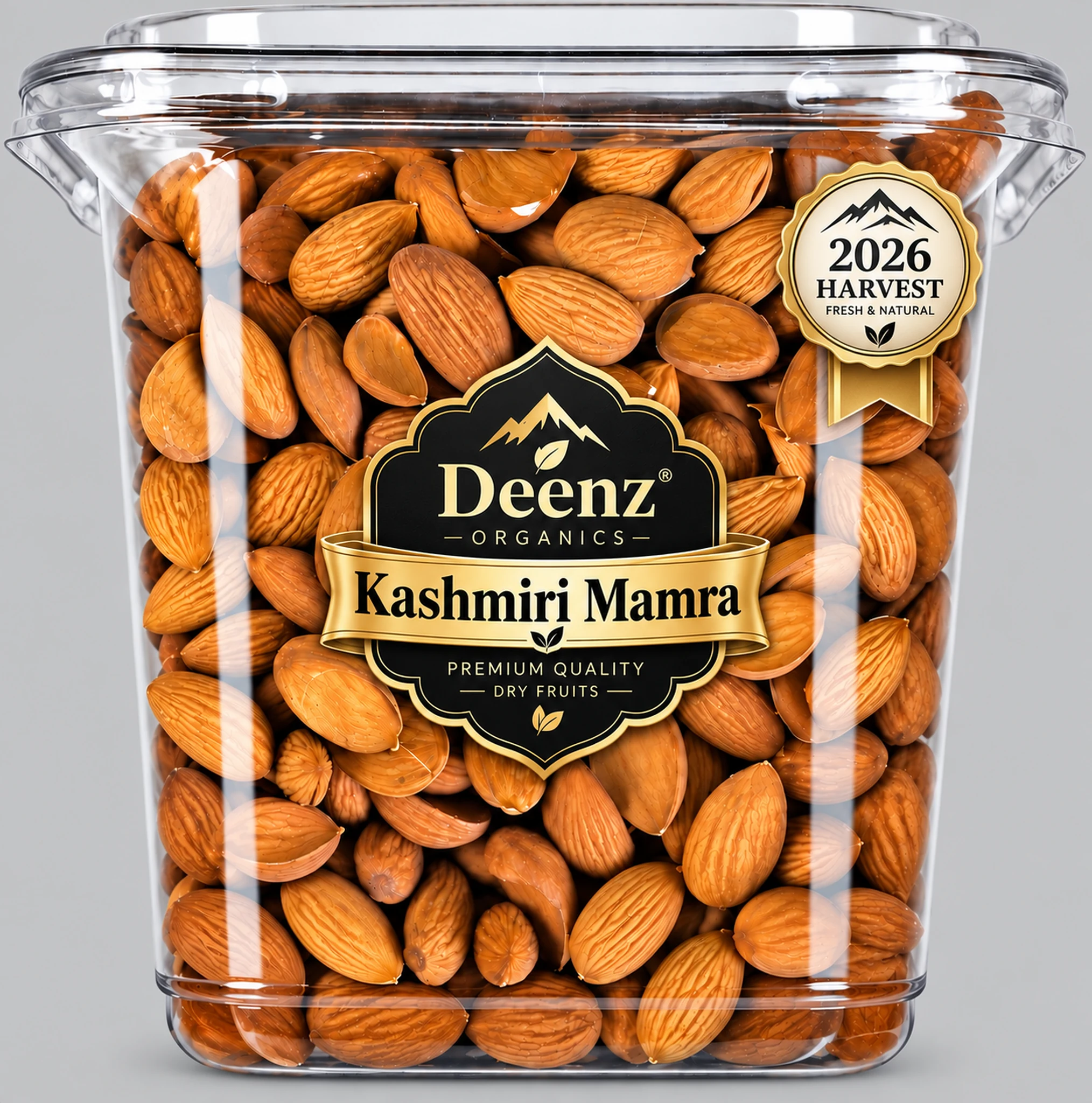
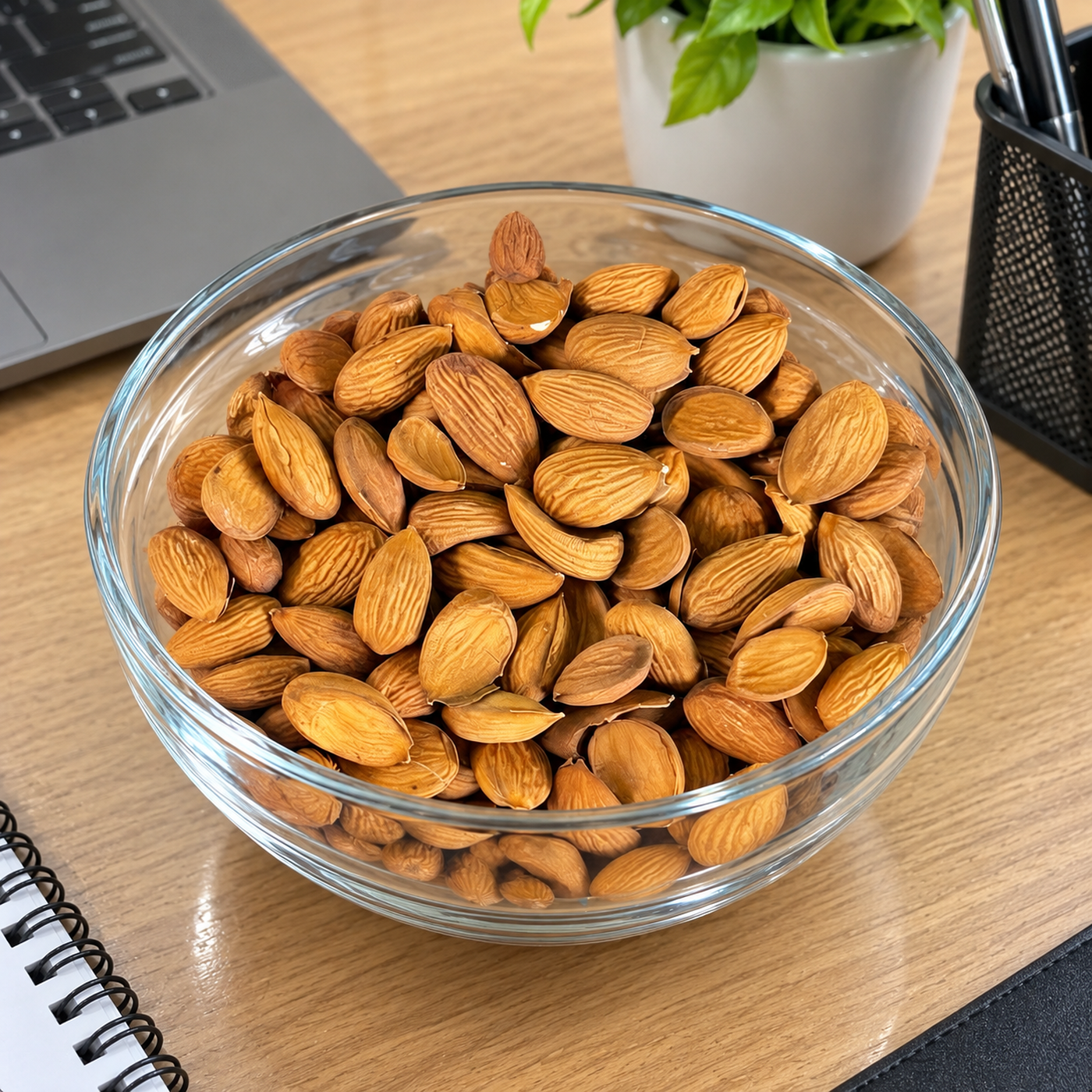
Mamra Is Not One Thing — It Is Three
This is the first honest thing we want to tell you. Mamra almond grows wild, without proper irrigation, in three different mountain regions — Kashmir in India, and across the border in Iran and Afghanistan. All three are genuinely called "Mamra", and all three are richer in natural oil than a normal California-type almond. But size, taste and even price are not the same across the three, and a seller who does not tell you which one you are buying is not being fully honest with you.
How Kashmiri Mamra Is Different
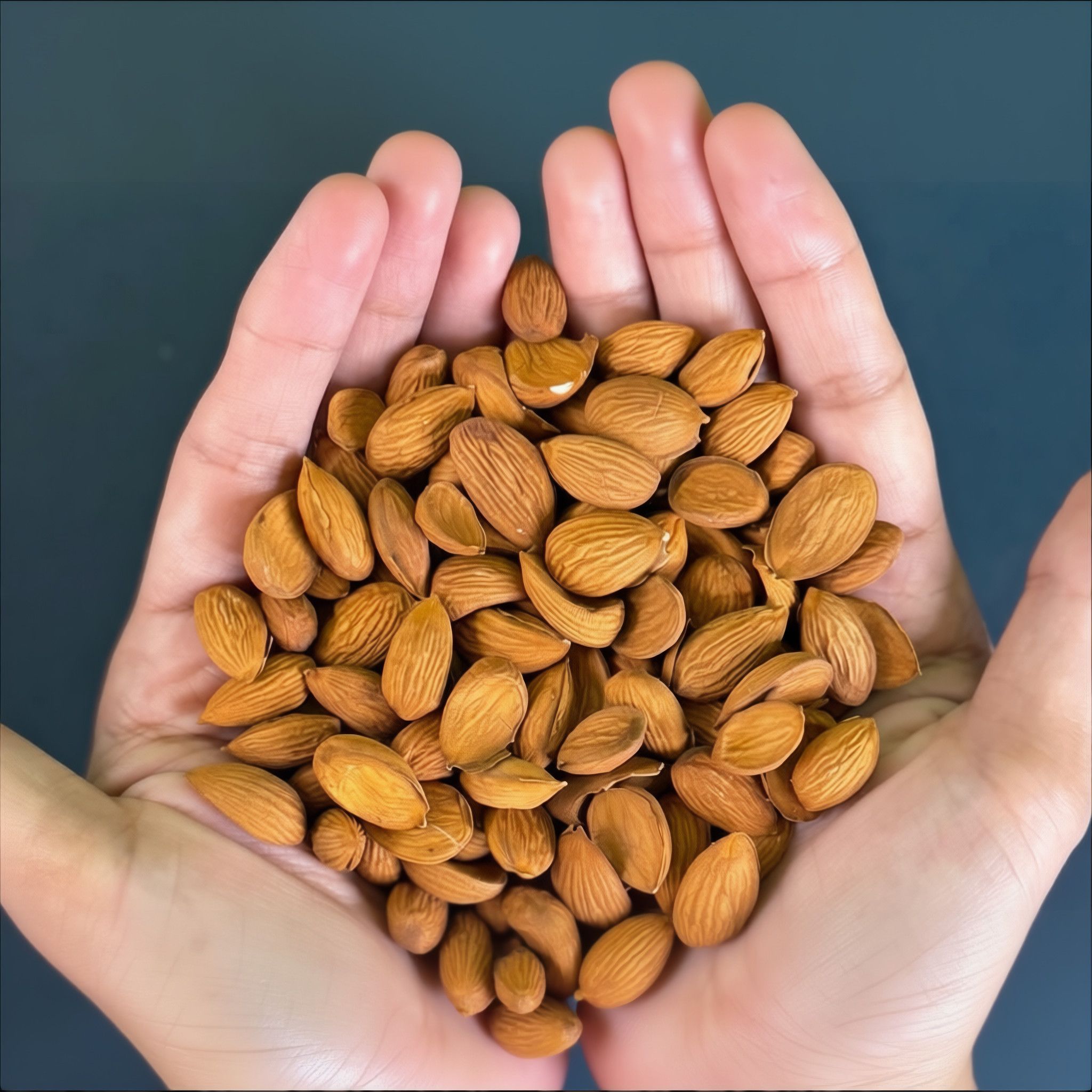
Kashmiri Mamra Badam grows in the cold, high-altitude, mineral-rich valleys of Kupwara and Gurez in our own Kashmir. It is genuinely smaller and more compact than Irani or Afghani Mamra, with a curved, concave shape and a light brown, textured skin — the shape is a little irregular, not the neat, even almond shape you see in Irani or Afghani Mamra, and honestly, that irregular wild shape is part of what tells you it is real Kashmiri Mamra and not a cultivated look-alike. What people notice first when they actually eat it is the oil — Kashmiri Mamra feels rich and almost buttery in the mouth, and it is also naturally higher in minerals than the other two origins, which is part of why it does not feel dry or empty when you chew it.
How Irani and Afghani Mamra Are Different
Irani Mamra is the largest of the three, with a longer, neat, elongated shape and a firm bite — it looks like a "proper" almond, if you are judging only by shape. Afghani Mamra sits in the middle in size, with a similarly regular shape and a slightly darker skin. But here is the honest part: many people who try Irani or Afghani Mamra after Kashmiri tell us it feels comparatively dry in the mouth, almost flat in taste, without that buttery richness Kashmiri Mamra has. The shape may look more "correct", but the actual eating experience is where Kashmiri Mamra pulls ahead for most of our customers.
Why We Personally Recommend Kashmiri Mamra
We are Kashmiri ourselves, so we will not pretend to be fully neutral here, but we will still be honest about our reasons. First, Kashmiri Mamra does not carry the extra import cost and customs duty that Irani or Afghani Mamra usually carries when sold in India, so you are genuinely paying for the almond, not extra transport and duty. Second, because we source it directly from small growers in Kupwara and Gurez, it reaches you fresher, hand-picked and sun-dried with minimal processing, without long international shipping — and that freshness is a big part of why it tastes buttery instead of dry. Third, its natural mineral richness and softer, sweeter character simply works better for everyday eating, not only occasional gifting.
We are not saying Irani or Afghani Mamra is bad — both are genuinely good almonds in their own way, and if you only care about a big, neat, uniform-looking almond, Irani may appeal to you more on looks. But for daily home use, real taste in the mouth, and honest pricing without a middleman import chain, Kashmiri Mamra is what we would put in front of our own family, and it is the only origin we sell.
Why Freshness Changes The Taste So Much
A big part of why Irani or Afghani Mamra can taste dry by the time it reaches an Indian kitchen is simply distance and time. These almonds travel a long way, sit in storage and transit for weeks or months, and that slowly pulls moisture and freshness out of the kernel, even though the oil content on paper is good. Kashmiri Mamra does not have this problem — it moves from our own orchards in Kupwara and Gurez straight to our packing, with no long border crossing in between, so what reaches you is closer to how it tasted the day it was harvested.