
Marchwangan — What We Actually Call It At Home
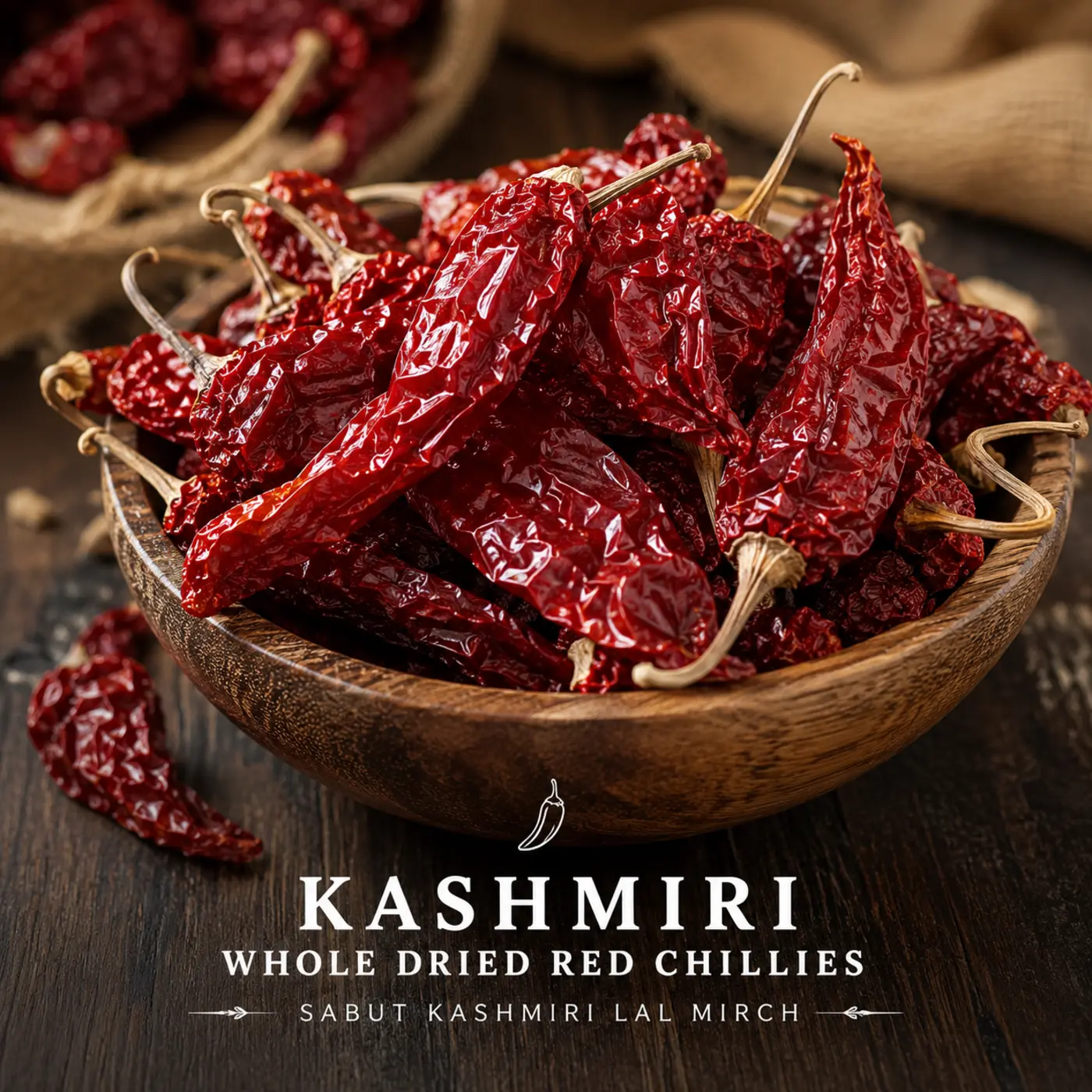
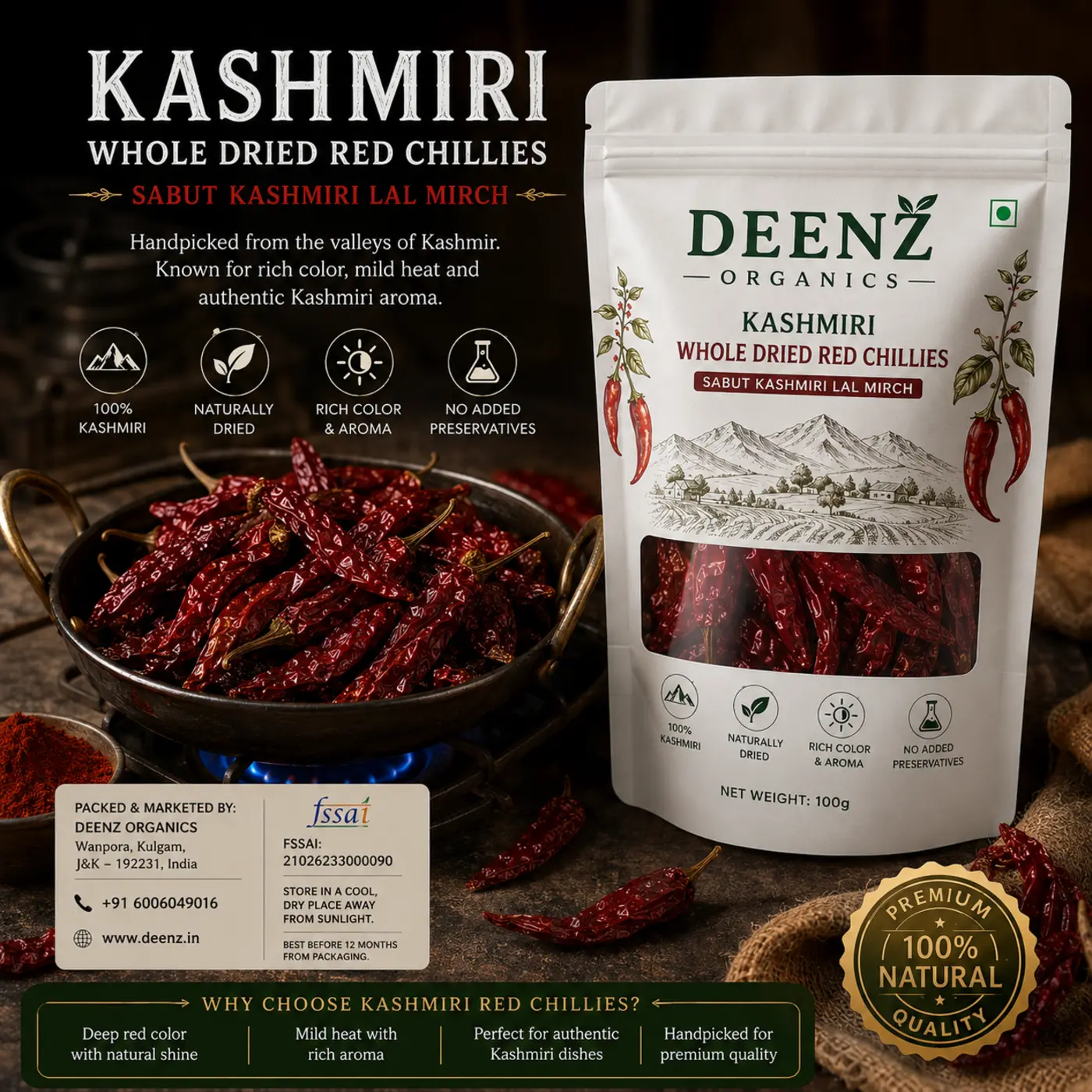
Outside Kashmir this chilli is mostly known as Kashmiri Lal Mirch or Kashmiri red chilli, but in our own homes we simply call it Marchwangan. It has been part of Kashmiri kitchen for generations, used in almost every curry, and it is a proper Wazwan ingredient too — a real Rogan Josh is simply not made without it.
Colour, Not Heat, Is The Real Point
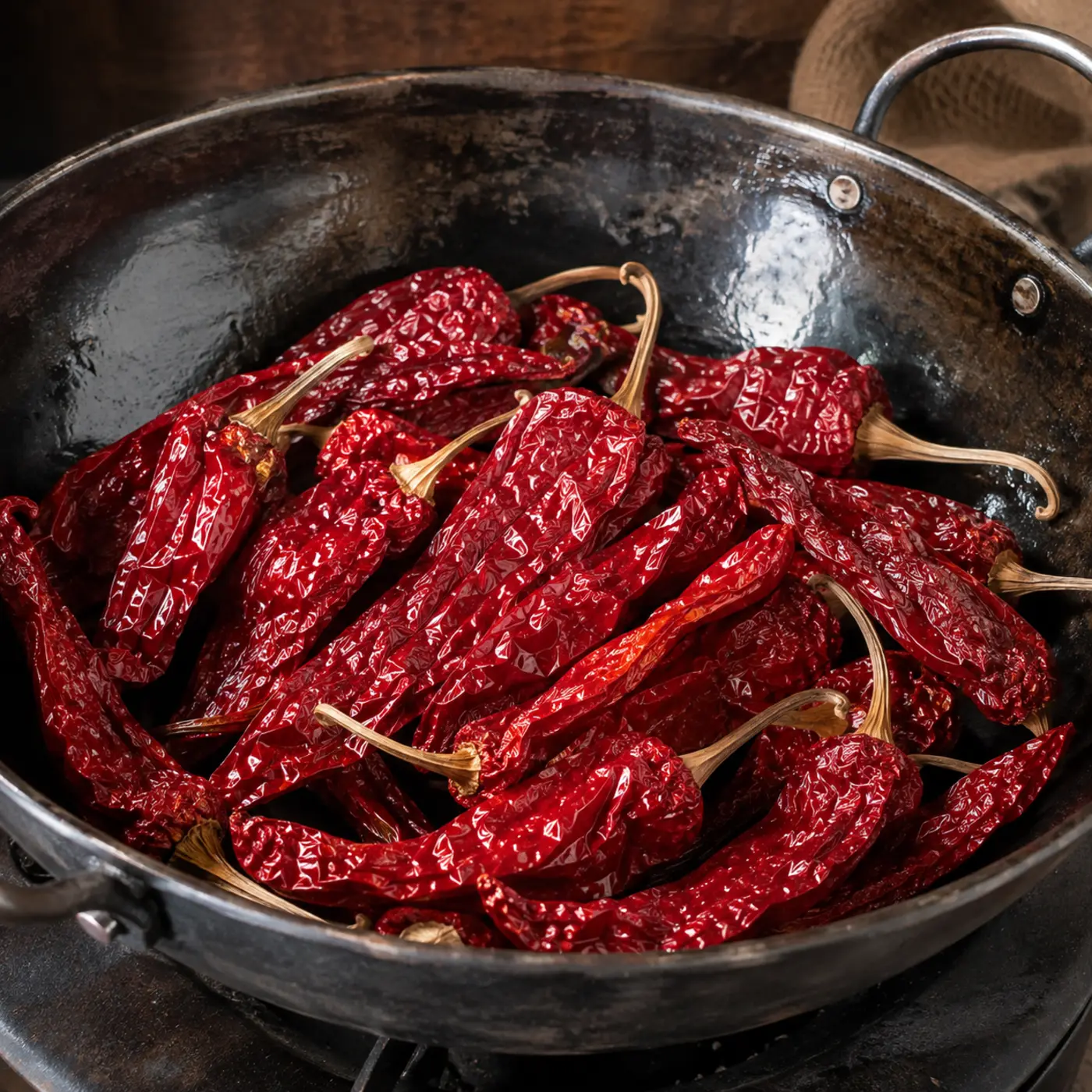
If you are expecting this chilli to be very hot, you will be a little surprised, and that is exactly the point. Kashmiri chilli is genuinely mild, somewhere around 1,000 to 2,000 Scoville heat units, which is far lower than a Guntur chilli that can go up to 30,000 or more. What our chilli gives you instead is colour — a deep, natural crimson-red that comes from carotenoid pigments in its thin skin, not from any added colour or dye.
This is why so many cooks and restaurant kitchens across India use Kashmiri chilli specifically to get that rich red gravy colour in dishes like Rogan Josh, butter chicken, or paneer curries, without making the dish sharply spicy. You get the look of a fiery dish, with a gentle warmth that most people, even children, can handle comfortably.
How It Is Different From Guntur or Byadagi
Guntur chilli, mainly from Andhra Pradesh, is grown for heat first — it is genuinely one of the hotter chillies used in Indian cooking, with thick skin and strong pungency. Byadagi chilli, from Karnataka, sits in the middle, giving good colour with moderate heat. Kashmiri chilli sits at the mild, colour-first end — thin skin, fewer seeds, and colour that deepens naturally as it dries in the sun.
How Ours Is Traditionally Dried
We are sourcing these chillies directly from small family farms in the Anantnag and Kulgam belt of South Kashmir. After harvest, the chillies are tied together in long strings and sun-dried the old traditional way, in open air on village roofs, for many days, until the skin turns wrinkled and a dark crimson red. No chemical drying, no artificial colour spray, just sun and time, the same way it has been done here for a long time.
How To Use It In Your Cooking
Whole dried Kashmiri chilli is usually soaked in warm water for some minutes, then ground into a smooth paste and added early in cooking, so the oil takes on that rich red colour before the rest of the masala goes in. It works beautifully in Rogan Josh, dal, paneer, and even in a simple tadka, giving your dish restaurant-style colour without adding real spiciness. A little goes a long way for colour, so you do not need to overdo the quantity.