
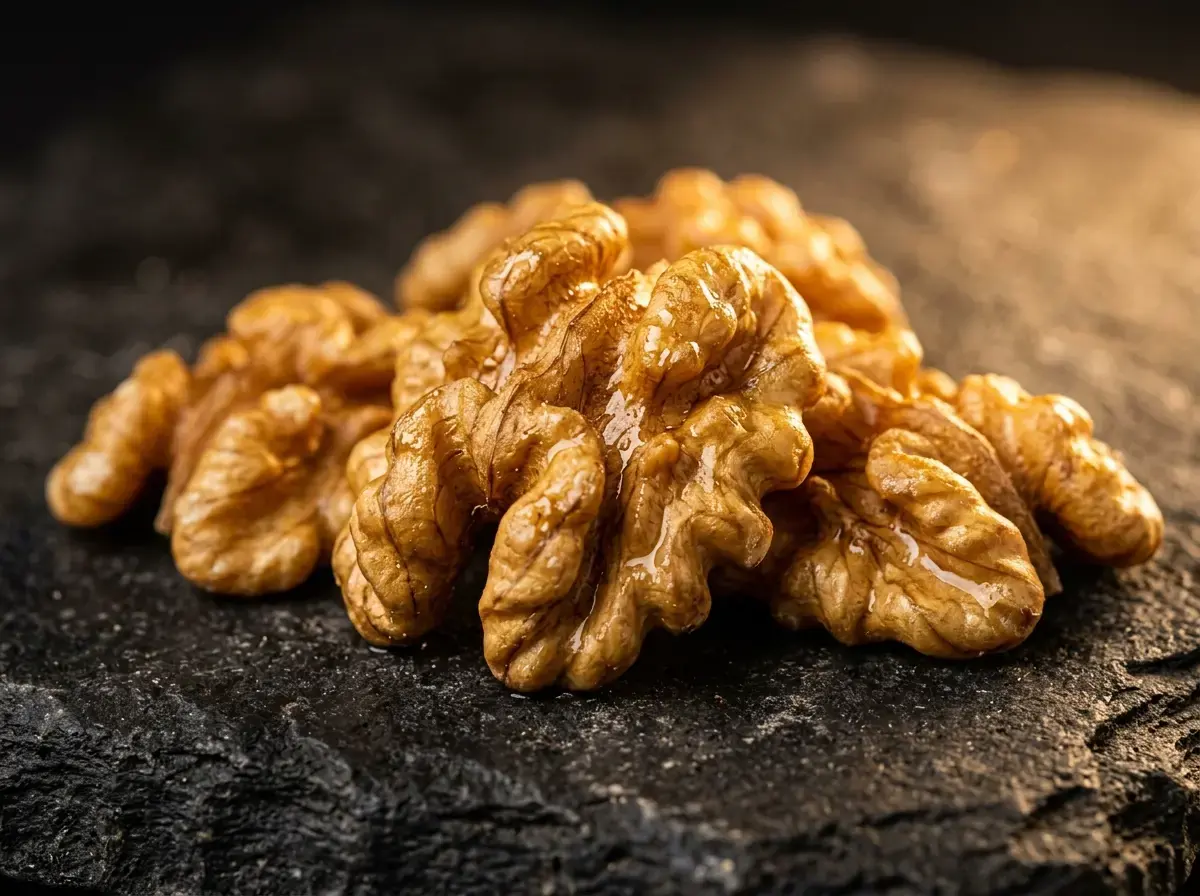
Why people connect walnuts with heart health
Walnut, or akhrot, has long been part of Kashmiri homes, mainly as a winter dry fruit and in festive dishes. In recent years, it has also become known as a heart-friendly food, mostly because of its fat content, which is different from most other nuts. Walnut is one of the few nuts that has a good amount of alpha-linolenic acid (ALA), a plant-based omega-3 fat, along with fibre and natural plant compounds. Because of this, walnut has been studied more than most other nuts when it comes to heart health, including large studies running for two full years. Here is what that research actually shows, honestly, including where it is strong and where it is weaker than people often think.
Does it really help lower cholesterol?
On cholesterol, the evidence is genuinely strong. A study in the American Journal of Clinical Nutrition, which combined 26 trials with more than 1,000 people, found that walnut-rich diets lowered total cholesterol, LDL cholesterol and triglycerides, compared with diets without walnut, without causing weight gain.[2] A newer 2026 study, combining 49 trials, published in Food Science and Nutrition, found the same result again, across nearly 4,600 people.[3] A large two-year study called WAHA, published in the journal Circulation — one of the biggest and longest walnut studies done so far — found that older adults eating about half a cup of walnuts daily for two years had fewer harmful small LDL particles, which is linked to lower heart disease risk.[1] On cholesterol specifically, this is not just old belief; it is backed by real, repeated clinical evidence.
Does it really help blood pressure?
Here we want to be fully honest, even where the result is not what people might expect. Most large studies on walnut and blood pressure find little to no real effect. The same WAHA study,[1] and a review of 18 trials with around 1,800 people, published in Phytotherapy Research, found that walnut did not clearly change blood pressure overall.[5] A smaller part of that research found a small blood pressure benefit at a lower daily walnut amount, but the honest, overall picture from the biggest studies is that walnut is not a strong or reliable food for lowering blood pressure by itself. If someone tells you walnut alone will fix high blood pressure, that claim goes further than what the research actually shows.
Does it really help with inflammation?
This result is actually more interesting than the blood pressure one. The same two-year WAHA study, in a separate paper published in the Journal of the American College of Cardiology, looked closely at inflammation markers in blood.[4] It found that people eating walnuts daily for two years showed improvement in a few inflammation markers, compared with people not eating walnuts — though one common marker did not change. Inflammation is thought to be one of the causes of heart disease over time, so this finding matters. It is a real, published result from the largest walnut study done so far, though not every inflammation marker improved, and shorter studies on this topic have shown more mixed results.
How Kashmiri mountain walnut compares to other walnut
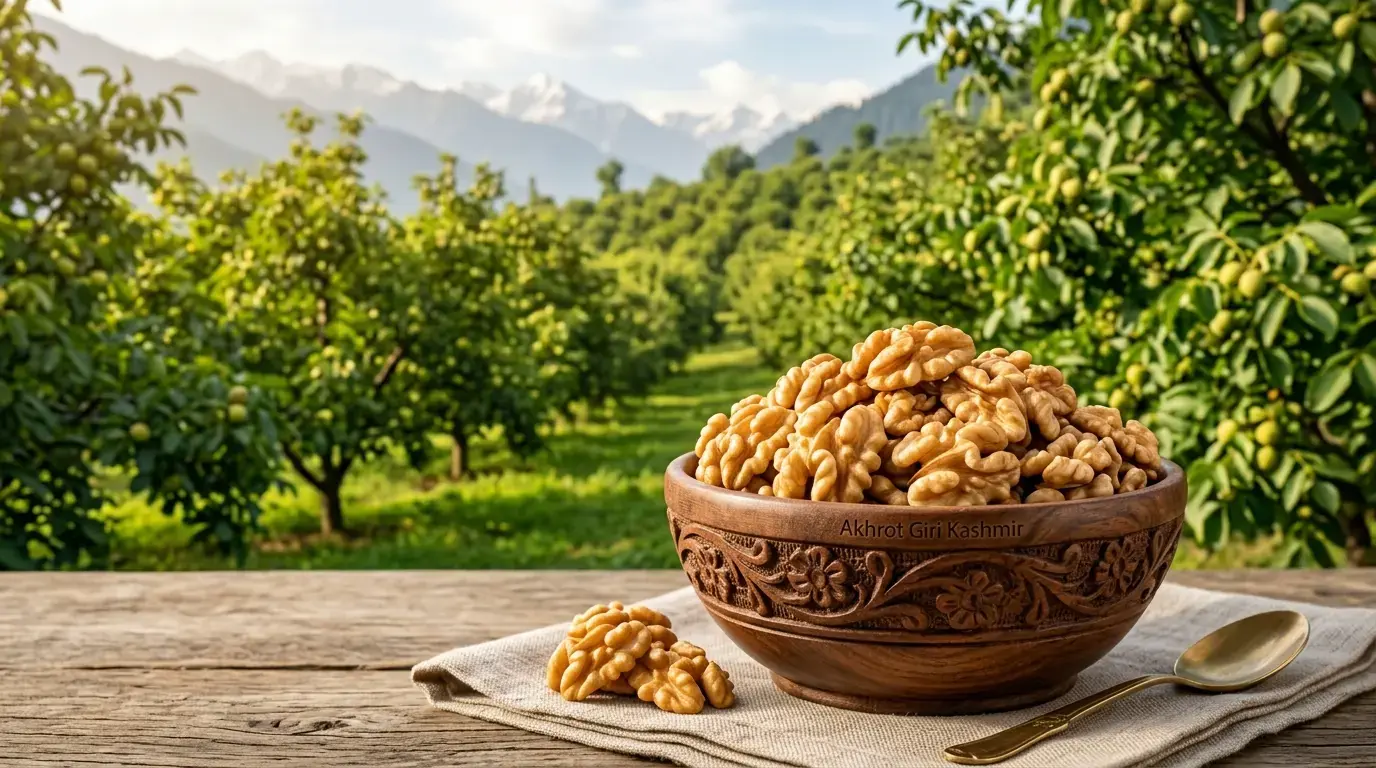
Most walnut eaten around the world, including the walnut most of the research above is based on, belongs to one species, Juglans regia, sometimes called Persian or English walnut. Our Kashmiri akhrot belongs to this same species, grown at high altitude in the Himalayas. Studies comparing different walnut-growing regions, including research done at the Central Institute of Temperate Horticulture in Srinagar on around fifty different Kashmiri walnut types, have found real differences in oil, protein and natural antioxidant levels between walnuts grown in different places.[6] A separate quality study on walnut kernels from the Kashmir Valley measured good levels of natural antioxidants in local kernels.[7] In simple words, this tells us Kashmiri mountain walnut genuinely belongs to the same, well-studied walnut family the heart research is based on, and that the place it grows in can affect its nutrient levels. We have not found a large heart-health clinical trial done on Kashmiri walnut by itself; most heart research so far has used walnut grown in Spain, the US and other regions. Our Kashmiri Walnut Kernels (Akhrot Giri) and darker-shelled Burzul Walnuts are both grown in these same high-altitude orchards.
A personal story from Kashmir during COVID-19
During COVID-19, we heard about an elderly man from our area, said to be in his nineties, who spoke to a journalist about how he got through the illness. He said that during his illness he lost his sense of smell and had little appetite — both known symptoms of COVID-19 — but he still made himself eat dry fruit, walnut especially, even without much taste or hunger. He felt this may have been one reason his body coped well at his age. We are sharing this story exactly as it was told to us, as one elderly man's personal belief, not as medical proof. There is no clinical study showing walnut treats or prevents COVID-19, and no dry fruit should be seen as protection against a serious viral illness. What is true is that walnut has protein, healthy fat, zinc and other nutrients that support normal nutrition, which matters when someone is sick and struggling to eat, and that loss of appetite and smell are well-known symptoms of COVID-19.
Being honest about the limits
We want to be clear here. It is true, and backed by real published research, that eating walnut is linked to lower LDL and total cholesterol, and the largest, longest study found improvement in a few inflammation markers too. It is not true, based on the same major research, that walnut reliably lowers blood pressure by itself, and it is not true that walnut or any dry fruit can treat or prevent a viral illness like COVID-19. Walnut, including our Kashmiri mountain walnut, can genuinely be a healthy part of a heart-friendly diet, and the old Kashmiri habit of eating akhrot through winter is not a wrong one. But it works alongside a proper diet and medical care, not in place of either, and we did not want to oversell it just to sell more walnut.
A quick, honest note
Kashmiri Mountain Walnuts are a food product, not a medicine. The information on this page is a simple summary of published nutrition research, for general information only. It is not medical advice, and this product is not meant to diagnose, treat, cure or prevent any disease, including heart disease. If you have a heart condition, high cholesterol, high blood pressure, or take regular medicine, please talk to a qualified doctor before changing your diet.