What does Ek Pothi Lahsun mean?
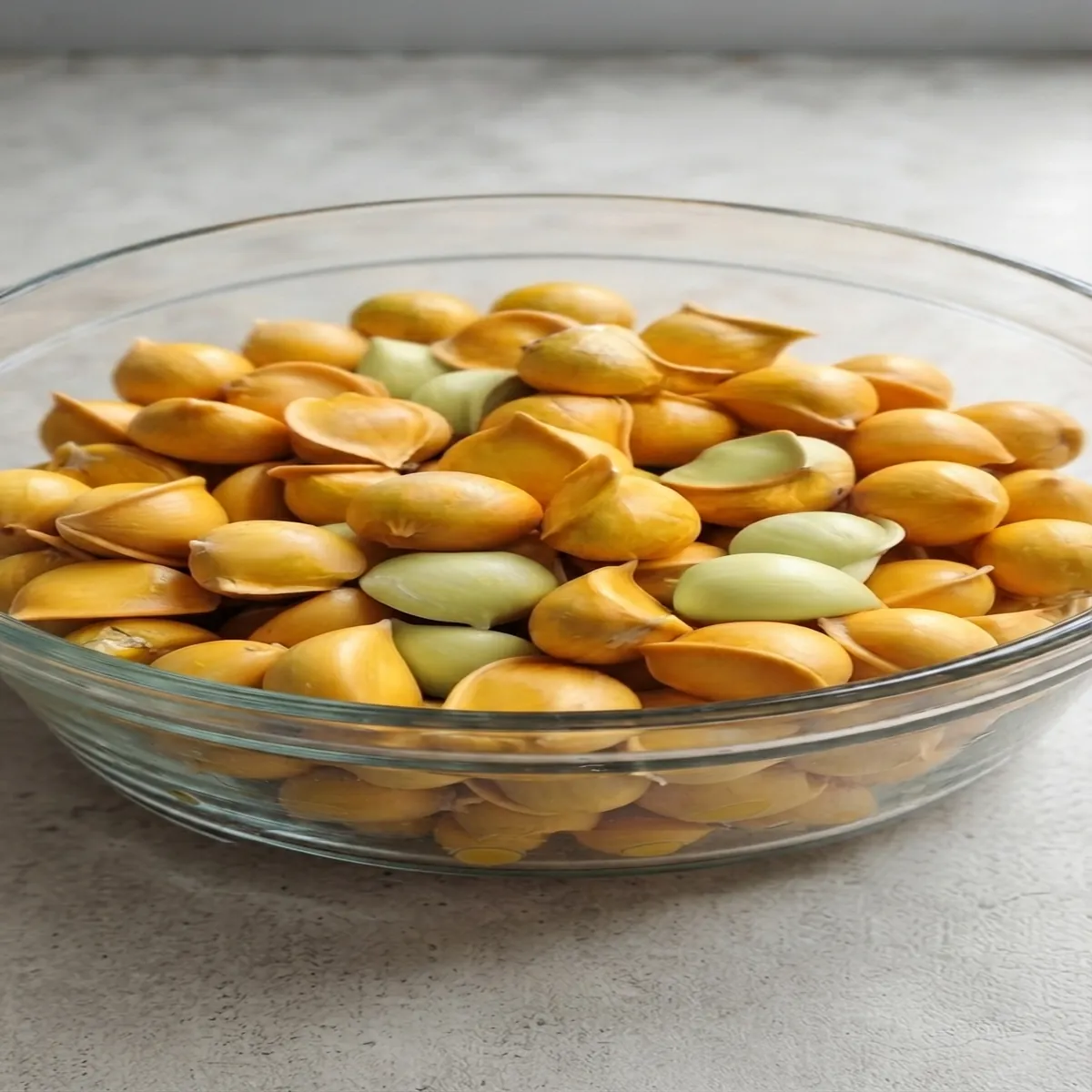
In Hindi, "ek" means one, and "pothi" means a bulb or single clove. So Ek Pothi Lahsun means garlic that grows as just one clove per bulb, instead of the 10-15 small cloves you see in normal garlic bought from the sabzi mandi. This garlic is grown in the hills of Anantnag, Kulgam and Pulwama in Kashmir, at a good height above sea level. Farmers there have grown this variety for generations, mostly for home use and local sale, which is why many people outside Kashmir have never seen it before.
Why it is also called Pink Garlic
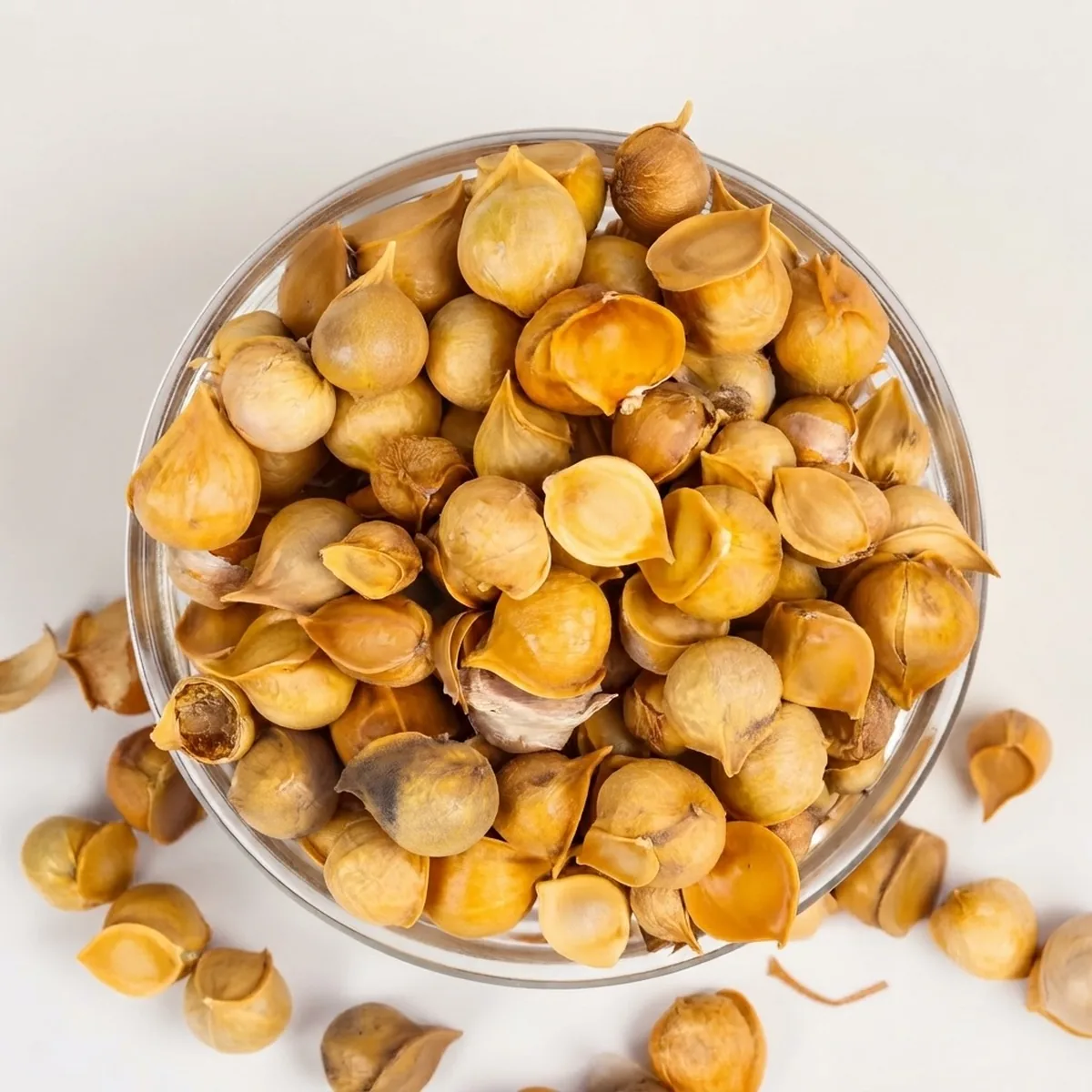
If you look closely at the outer skin of Ek Pothi Lahsun, you will notice a light pink-purple shade, unlike the plain white or light brown skin of regular garlic. This is a completely natural colour, coming from the soil and climate it grows in — it is not dyed or treated in any way. This pink-purple tinge is one of the easiest ways to recognise real Ek Pothi Lahsun when you are buying it. If a seller shows you garlic with plain white skin and calls it Ek Pothi Lahsun, it may not be the genuine hill-grown variety.
How Ek Pothi Lahsun is different from regular garlic
The biggest difference is simple: one bulb, one clove. When you break open a real Ek Pothi bulb, you get a single, solid piece — not many small cloves. The taste and smell are also much stronger than regular garlic, because the whole bulb's oils stay together in one piece instead of being spread across many small cloves. Because of the smaller harvest and slower growing time in the cold hills, Ek Pothi Lahsun usually costs more than regular garlic. This is normal for a genuinely rare, hand-grown crop, not overpricing.
How to use Ek Pothi Lahsun in your kitchen
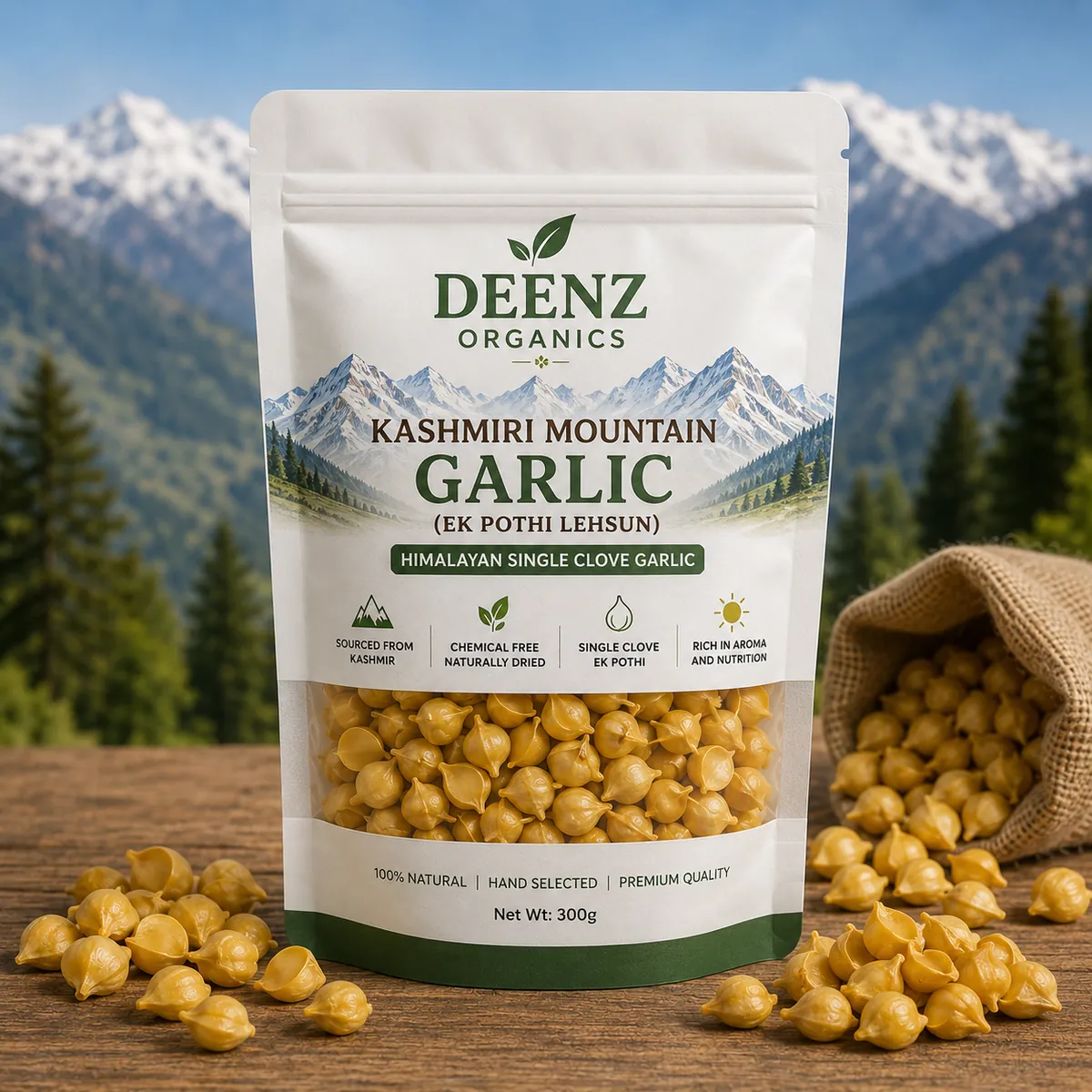
Break the outer shell to remove the single clove, then peel the thin skin, just like you would with normal garlic. Because it is much stronger, use a smaller amount than you normally would — one Ek Pothi clove can be as strong as 3-4 regular small cloves. It works well in tadka, dal, curries, and gravies. In Kashmiri kitchens, it is also crushed and used raw in small amounts, and ground together with walnut to make a traditional chutney called Doen Chetin. You can find both this garlic and walnut on our Kashmiri Mountain Garlic (Ek Pothi Lehsun) product page.
How to identify real Ek Pothi Lahsun before buying
A genuine bulb feels firm and heavy, not light or hollow. The skin should be dry and papery, with a visible pink-purple tinge, not plain white. When you break it open, it should give one single solid clove — if it splits into many small pieces, it is not the real single-clove mountain variety. We source ours directly from growers in Anantnag, Kulgam and Pulwama, so you get the same garlic that Kashmiri families have grown and used for years.