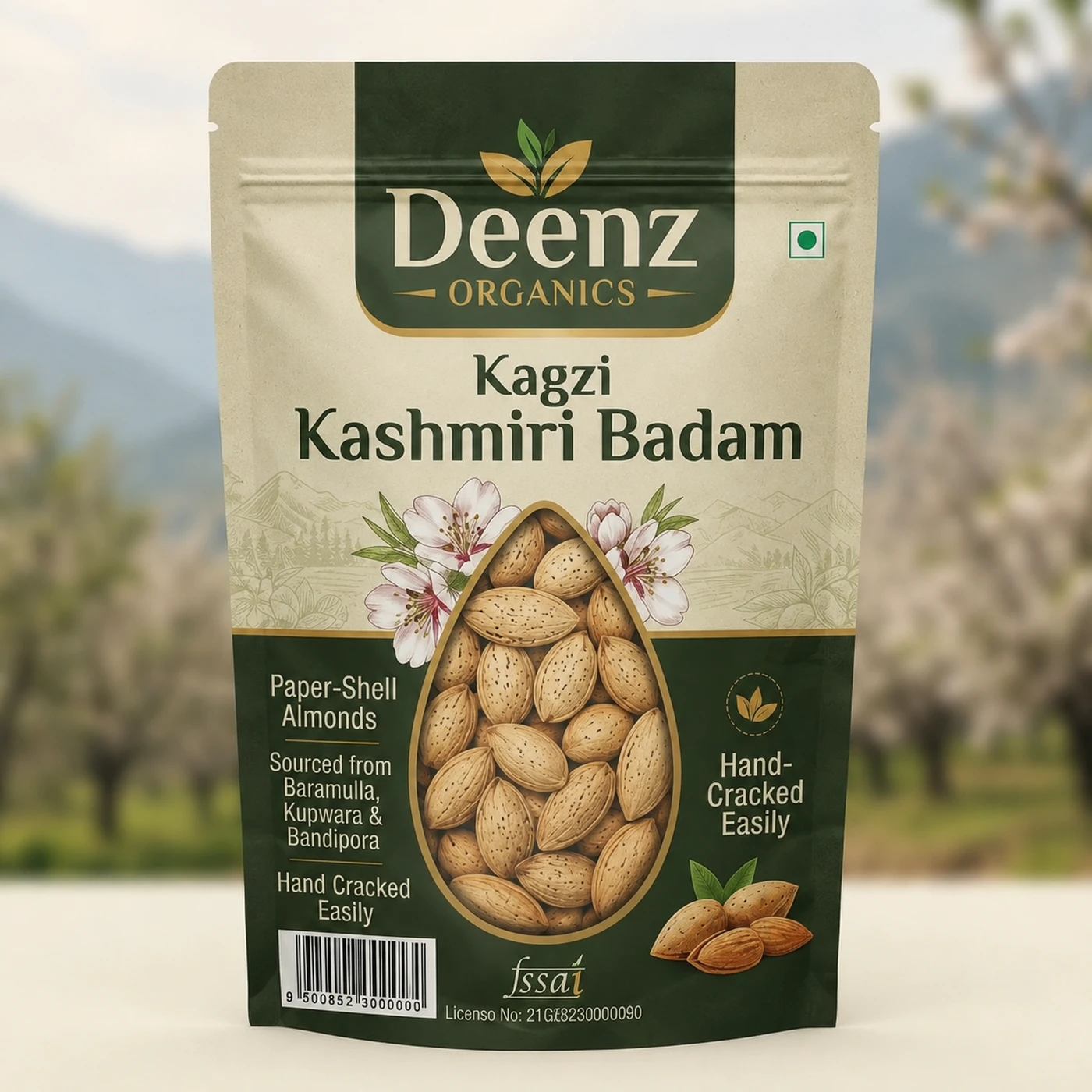
Pure Kashmiri Badam Giri (Desi Single Tree Almond Kernel)
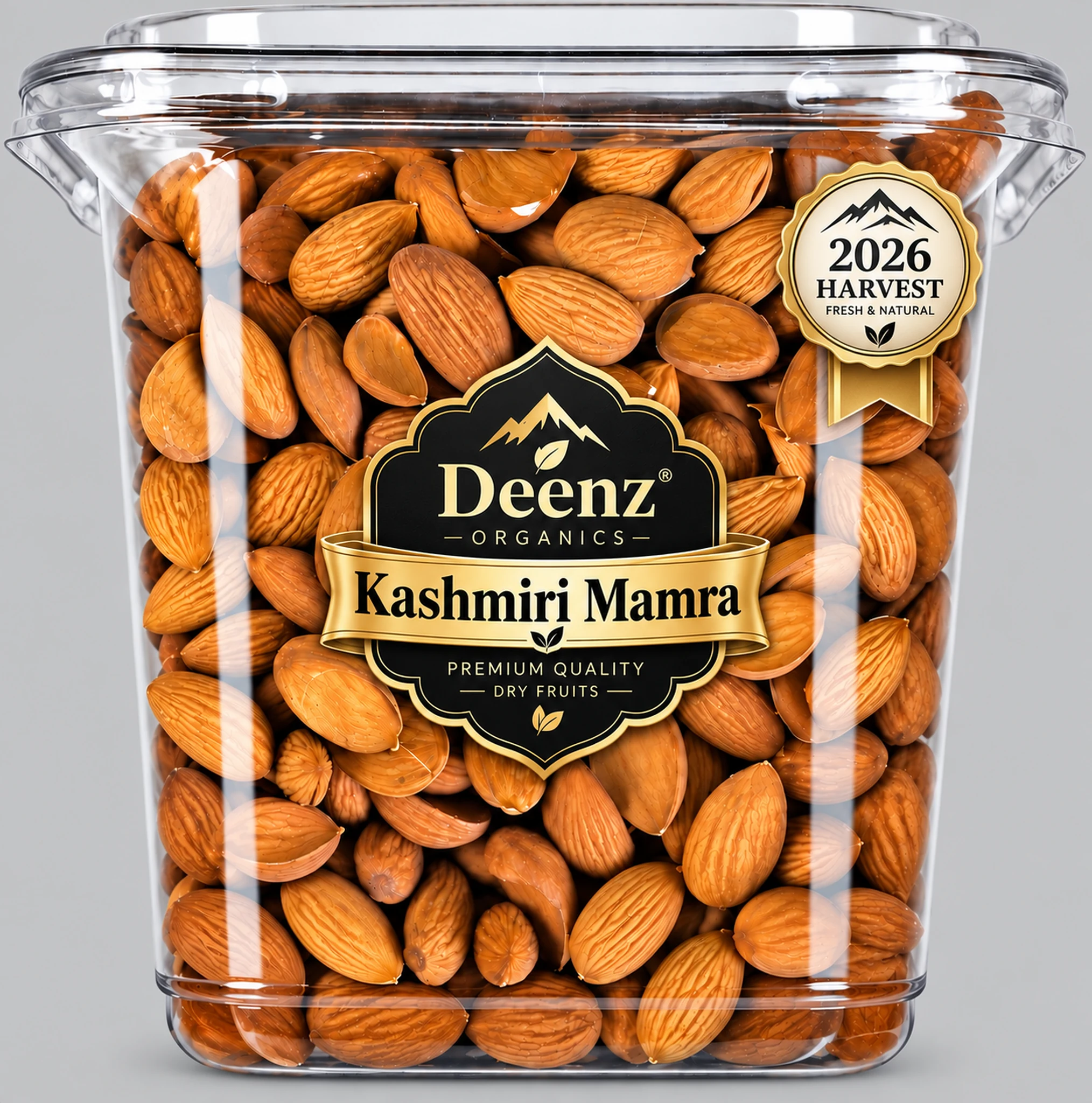
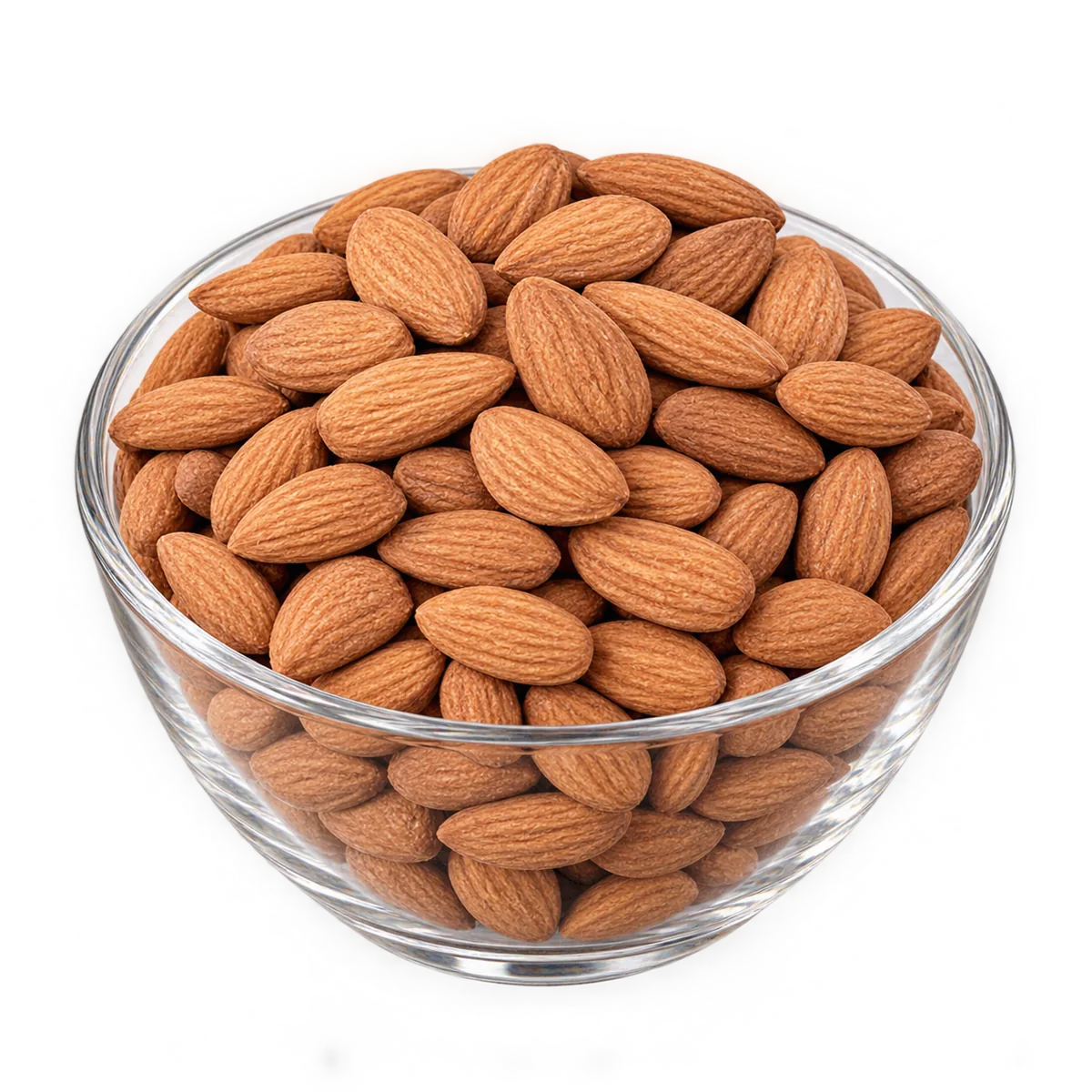
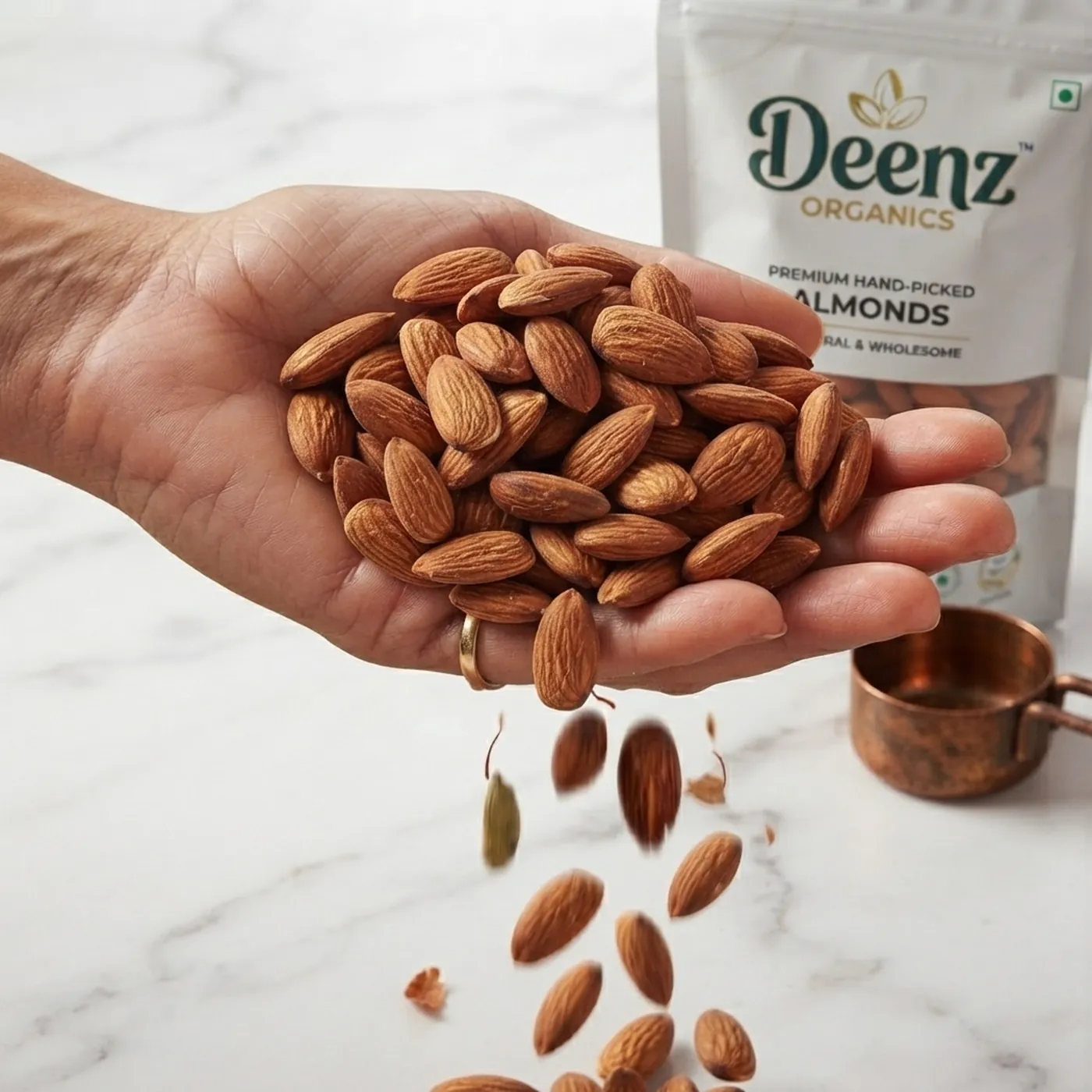
Desi Kashmiri Badam Giri from single family trees in Kashmir. Small size, full of natural oil, not mixed, not polished.

Product Specifications
Origin, variety, net weight & packaging details
Product Specifications
Origin, variety, net weight & packaging details
- Product
- Pure Kashmiri Badam Giri (Desi Single Tree Almond Kernel)
- Origin
- Kashmir, India
- Variety / Grade
- Kashmiri Desi Badam (Chota Badam)
- Net Weight
- 250 g
- Packaging
- Vacuum sealed pouch & food-grade airtight pack
- Country of Origin
- India
Product details
Harvest description & origin details
Product details
Harvest description & origin details
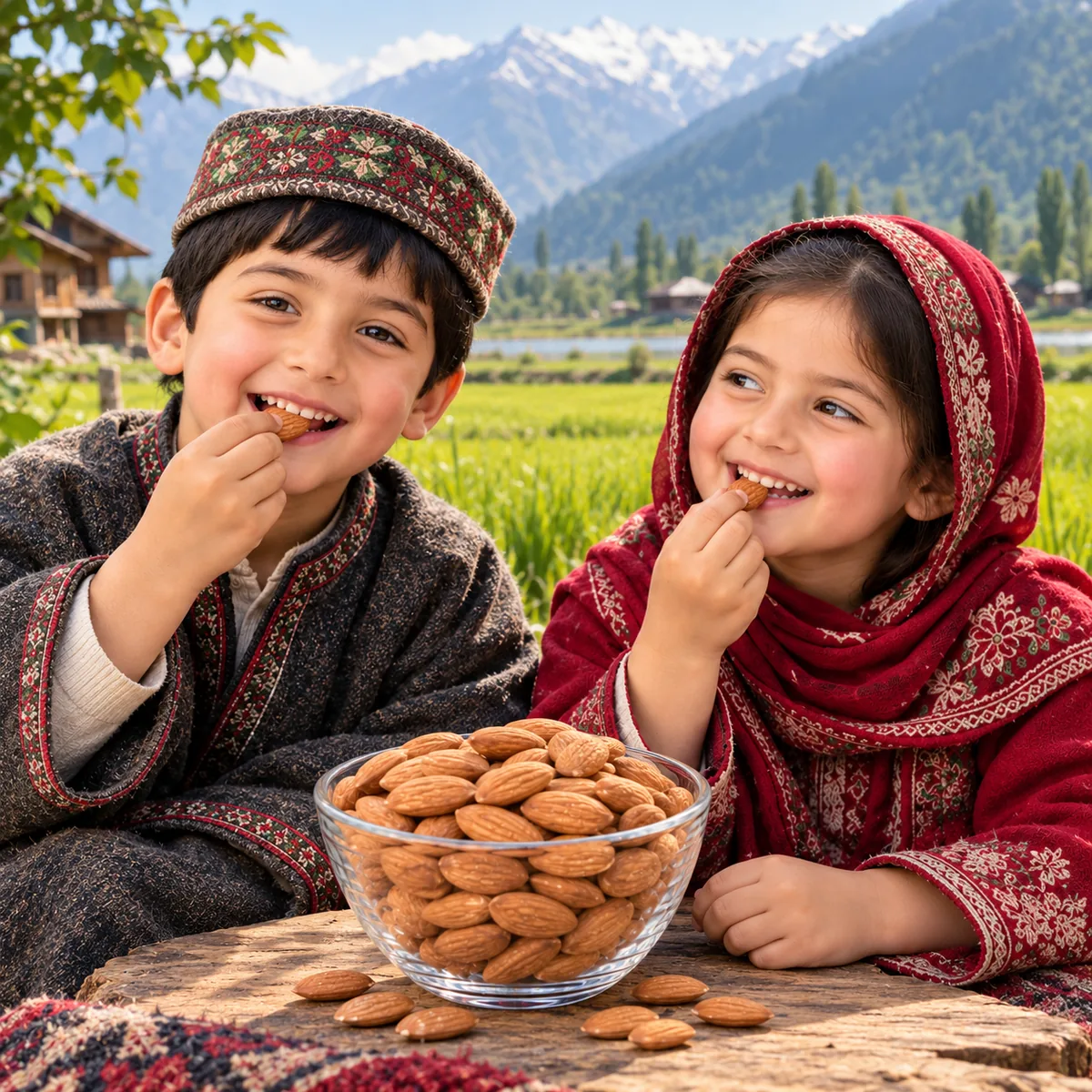
Kashmiri Desi Badam — in Kashmir we also call it Chota Badam or Single Tree Badam — is the real traditional almond grown in village orchards across Pulwama, Budgam, and Shopian side.
Many people only know imported California almonds or very costly Mamra, but in Kashmiri families, this Desi Badam is what we have eaten since our childhood for morning strength and memory.
Why it is called Single Tree Badam:
In Kashmir, traditional farmers do not mix almonds from different trees into one big pile. When one tree is harvested, those almonds are kept in separate sacks. In Kashmiri almond farming, every single tree is grown from a natural seed, not cloned in a laboratory. Because of this, every tree has its own soil taste, sweetness, and oil level. When we pack single tree harvest, you get uniform sweet taste and consistent quality in your bag, not random mixed kernels.
Different from Mamra Almonds:
Mamra is a wild variety with a curved boat shape, very light weight, and a very high price tag. Our Desi Badam is different: it has a compact, pointed teardrop shape. It is harvested from domestic village seedling trees. It is rich in natural almond oil just like Mamra, but priced fairly so every family can easily eat it daily without high expense.
Small Size but Full of Badam Oil:
If you look at foreign California almonds, they look very big and smooth, but when you chew them they taste flat and dry inside because they are heavily watered commercial hybrids. Our Kashmiri Desi Badam is naturally small in size, but inside it is dense and oily. If you press one kernel hard between your two fingers or crush it on clean white paper, you will instantly see pure almond oil (roghan) shining on your skin. Natural oil percentage is very high, around 45% to 48%.
Natural Sweet Taste and Honest Harvest:
Our Desi Badam has a deep, naturally sweet nutty crunch. Because these trees grow naturally and bees do open pollination, very rarely (maybe 1 or 2 kernels in a full 1 kg bag) a naturally bitter almond can turn up. In Kashmir, our village elders always say that 1 or 2 bitter almonds in a big harvest is the true guarantee that the tree is 100% natural desi seed variety, not genetically altered.
Zero Chemical Polishing or Bleach:
Commercial markets often wash almonds with chemical water or polish them with mineral oil to make them shiny brown. We never do any of this. Our almonds are cracked by hand in the village, cleaned with clean cloth, naturally dried in Kashmir mountain air, and vacuum packed fresh.
Traditional Morning Soaking Routine:
The best way to eat Kashmiri Desi Badam is to soak 6 to 8 kernels in fresh water at night. By morning, the thin brown peel slips off very smoothly. Chew them slowly on an empty stomach and drink a glass of warm milk or water. It gives long-lasting energy, lubricates the joints, helps students with study focus, and keeps the body warm during cold weather.
What is Kashmiri Desi Badam?
In Kashmir villages, almond trees grow along sunny mountain slopes in family orchards. Unlike hybrid commercial farms where trees are cloned and heavily watered, Kashmiri desi badam trees grow naturally from seeds. The almonds are naturally small and pointed, but packed with natural oil that gives them a rich, nutty flavor.
Difference Between Desi Badam and Mamra
Many people confuse Kashmiri Almonds with Kashmiri Mamra badam. Mamra is a rare wild variety with a distinct boat shape, high oil, and a premium price. Kashmiri Desi Badam is harvested from local village seedling trees. It is also very rich in natural oil, has a small pointed shape, and provides excellent everyday nutrition for families at an affordable price.
What is Single Tree Harvest?
In traditional Kashmiri almond harvesting, workers pluck almonds from one tree and keep them in a separate sack. Because every seed-grown tree has its own unique soil character and sweetness, keeping the batch from a single tree ensures consistent taste, size, and oil level in every pack.
High Natural Oil You Can Feel
If you are used to supermarket California almonds, you will notice a big difference. Commercial almonds are often big and dry. When you break or press a Kashmiri Desi Badam with your fingers or crush it on paper, you can clearly see the rich almond oil release. It contains around 45% to 48% natural almond oil.
Traditional Morning Routine in Kashmir
In Kashmiri homes, soaking almonds overnight is a daily tradition for every student and working person. Soaking softens the kernel, helps you peel the outer skin easily, and makes the nutrients easy to digest. Eating 5 to 7 soaked almonds in the morning with warm milk is a time-tested daily habit for memory and energy.
100% Raw, Unpolished & Honest Harvest
We do not polish our almonds with artificial gloss, sulfur smoke, or machine water wash. Every batch is hand-shelled, sorted by village workers, and sun-dried in fresh mountain air before being vacuum packed at our facility in Kashmir.
How to use
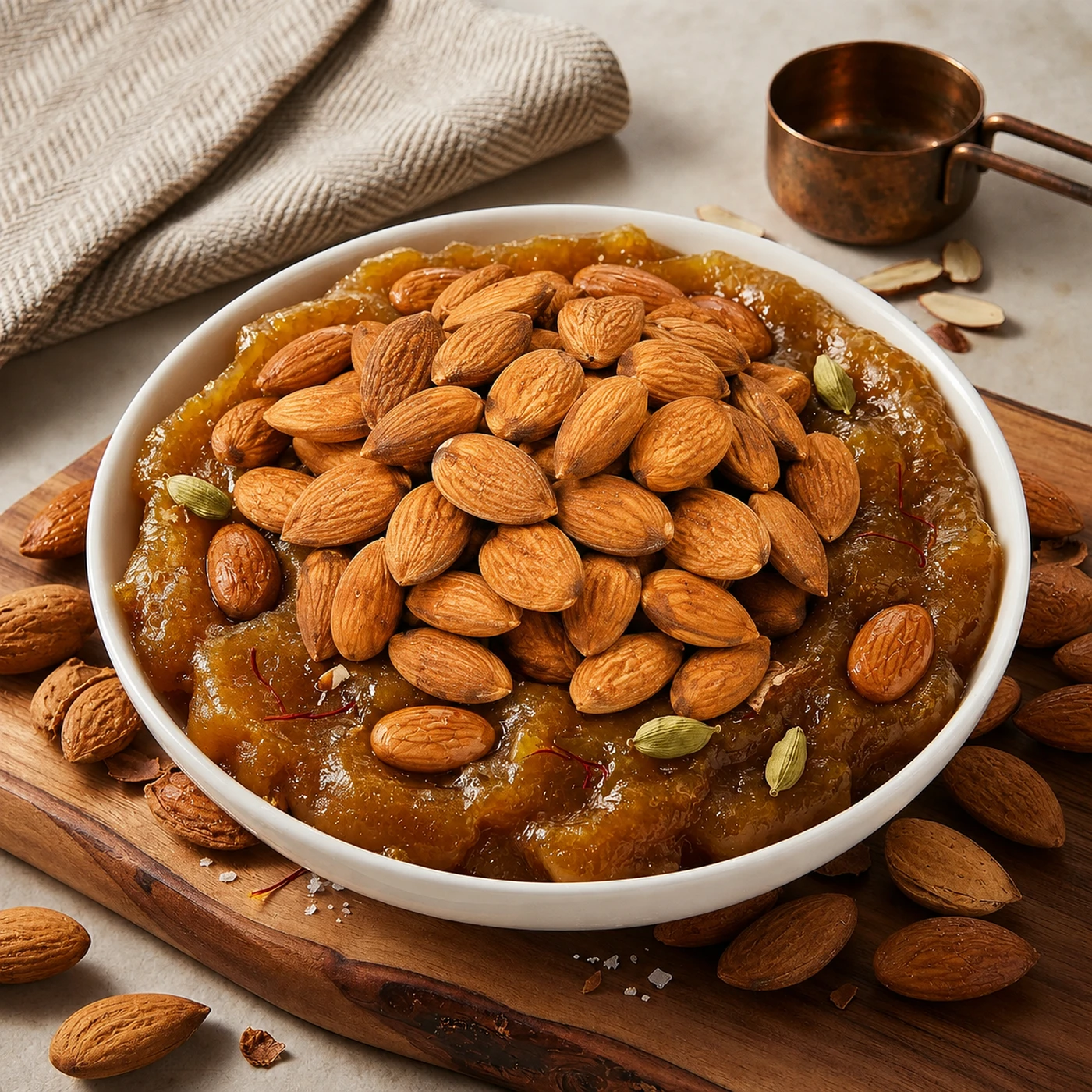
Soak 5 to 8 almonds in water overnight. In the morning, peel the skin easily and chew properly on an empty stomach with warm milk or plain water. You can also grind them into a paste for badam milk, halwa, or add them to morning porridge for children and elders.
Storage Instructions
Store in a cool, dry place inside an airtight container. Keep away from direct sunlight, damp places, and stove heat. In hot summer weather, store in refrigerator to protect the natural almond oil from getting warm.
Questions and Answers
8 answered questions
Questions and Answers
8 answered questions
What is the difference between Kashmiri Desi Badam and Mamra Badam?
Why are these badam smaller in size than California almonds?
What does single tree harvest mean?
Can I see the oil coming out from the badam?
Is there any bitter almond inside the packet?
Are these almonds washed or polished with chemical?
How should I eat this badam for best health?
How to store this badam so it stays fresh?
Ratings and reviews
5.0 ★ based on 1 ratings
Ratings and reviews
5.0 ★ based on 1 ratings
Arvind
Verified Buyer • Bengaluru, Karnataka
Taste is very very good
10 Oct 2026
Verified Buyer Reviews Only
Go to My Account to Write a Review >