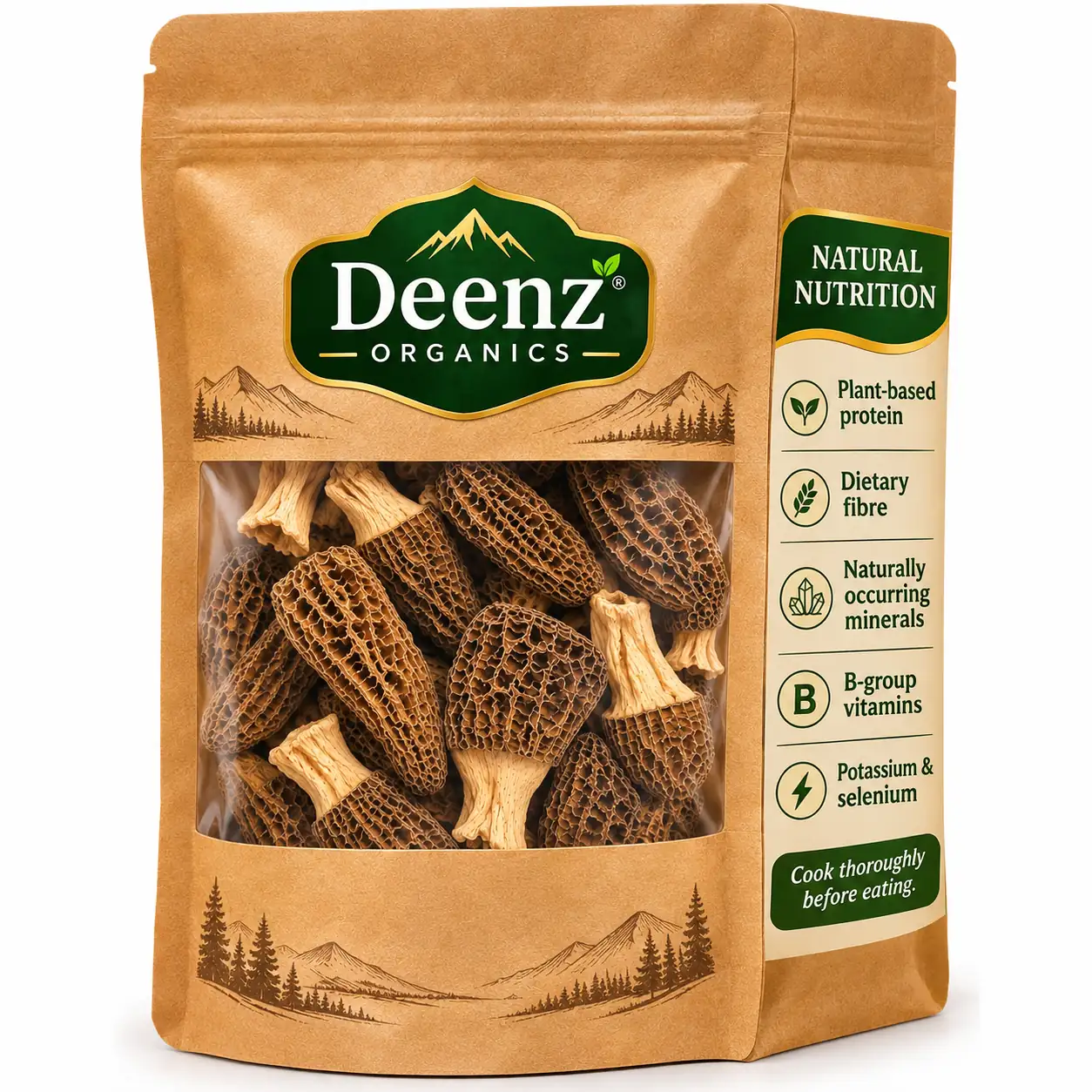

Morel Mushroom (Wild Himalayan Kashmiri Gucchi, Dried)
Kashmiri Gucchi, also known as Himalayan Guchhi, Kan Gitch, Wild Morel Mushroom or Dried Morchella. It grows in the hilly areas of Kashmir, and is collected by hand in places like Kulgam, Anantnag, Pahalgam and Qazigund, usually after cloudbursts.

Product Specifications
Origin, variety, net weight & packaging details
Product Specifications
Origin, variety, net weight & packaging details
- Product
- Morel Mushroom (Wild Himalayan Kashmiri Gucchi, Dried)
- Origin
- Forests of the Kashmir foothills (around 2,000 m)
- Variety / Grade
- Wild Kashmiri Gucchi
- Net Weight
- 25 g
- Packaging
- Food-grade sealed pouch in a protective box
- Country of Origin
- India
- Storage
- Airtight, cool, dry and dark place
- Pack Sizes & Prices
- 25 g – ₹849 • 50 g – ₹1,599 • 100 g – ₹2,999
- Sold & Shipped By
- Deenz Organics, Wanpora, Kulgam, Jammu & Kashmir • FSSAI Lic. 21026233000090
Product details
Harvest description & origin details
Product details
Harvest description & origin details
In Kashmir we call it Kan Gitch, and the rest of India calls it Himalayan Gucchi. In English it is the morel mushroom (Morchella esculenta). It is one of the most expensive foods in the world, and the reason is simple: it is wild. Nobody plants it. It comes up on its own in the forests of the Kashmir foothills, around 2,000 metres, for a few weeks in spring when snow melts and the first rain falls. People go in the early morning, walk for hours under the trees, and many come back with very little, because the spots where gucchi grows are kept secret in every village.
After picking, the mushrooms are cleaned, sorted by size, and dried. In villages they are often strung on a thread and hung in the sun and wind on the house roof. When dry they become small, light and dark, and they keep for months. That is how we used to eat gucchi in winter in the hills when fresh vegetables were not available. Collection has been going down in recent years, because springs are warmer and the rain is less, so the supply is getting smaller and not bigger.
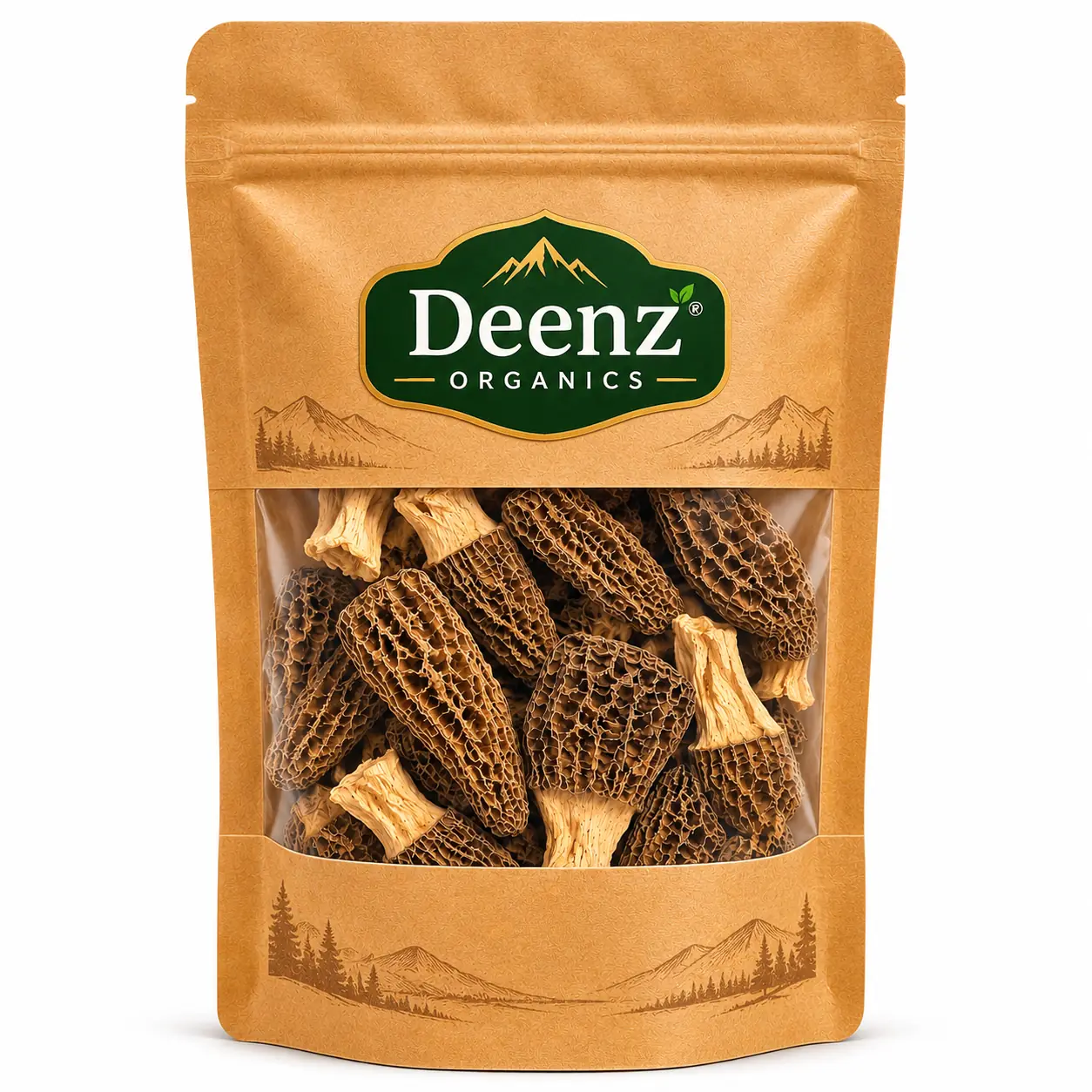
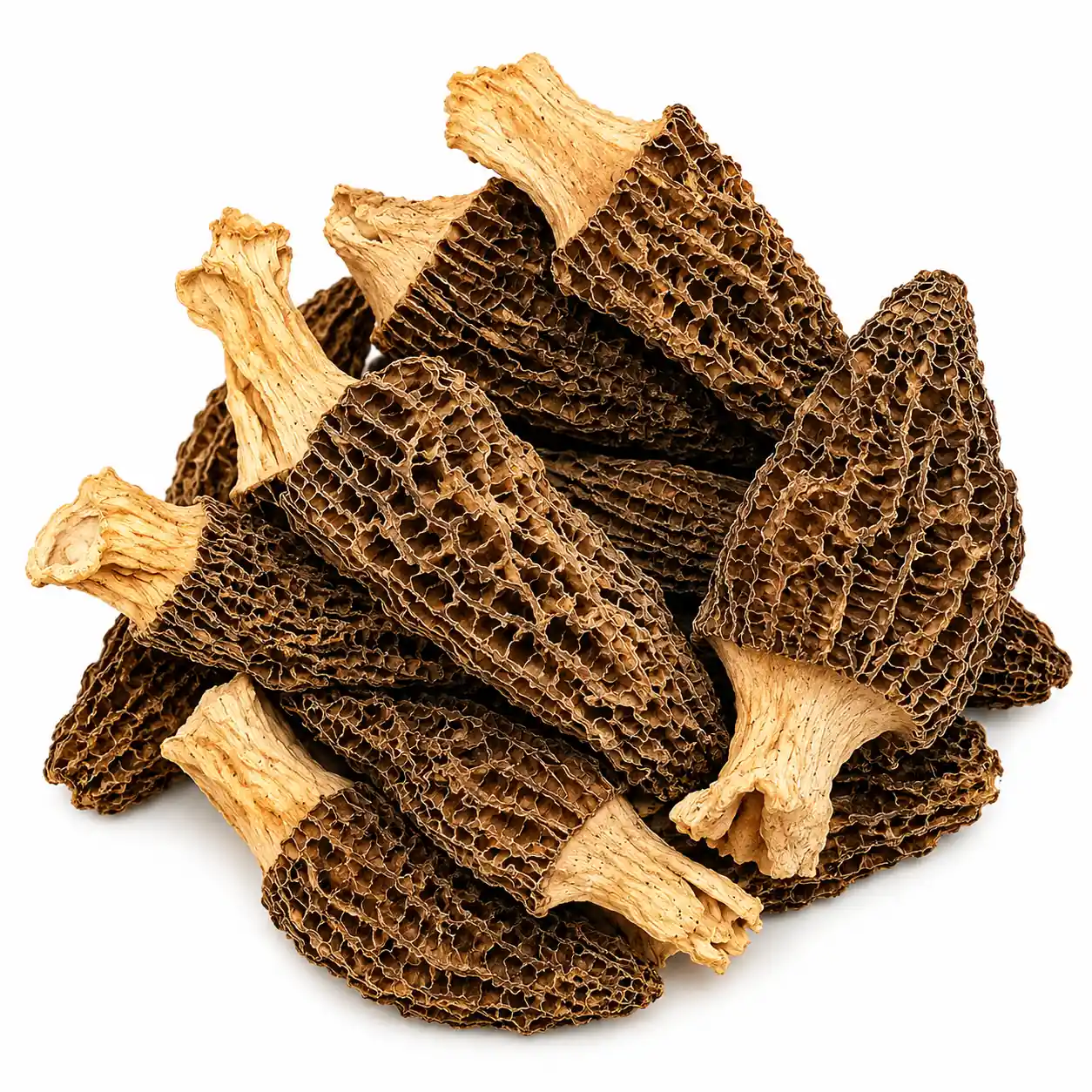
What you will get in the pack: dry, whole pieces, light brown to dark brown, with the typical honeycomb pits on the cap. Sizes are mixed. A few pieces can be broken, and a little forest soil may sit inside the hollow, this is normal for wild gucchi, and you will wash it out. The smell is deep, earthy and smoky.
How to know it is a real morel: A real morel is hollow from top to bottom, with a cap that is joined to the stem and covered with honeycomb pits. Cut a dry piece and you will see that it is empty inside. Some wild mushrooms that look a little like morels (false morels) are poisonous, so never buy gucchi from a seller who cannot tell you where it came from. There is also cultivated morel now, which is cheaper, and there are cheap dried morels from other places sold under the name Kashmiri gucchi. We sell only wild gucchi from Kashmir.
Important, please read: Gucchi must never be eaten raw or half-cooked. Raw morels can make you ill. Always soak, wash and cook it well. Do not eat it together with alcohol. If you have never eaten wild mushrooms before, try a small amount first, because some people are allergic.
How to cook: Soak the dry pieces in warm water for 20 to 30 minutes until they are soft. Squeeze them gently and rinse 2 or 3 times in fresh water, opening the hollow so that all the sand comes out. Keep the soaking water, it has a lot of flavour, and pour it through a clean cloth to remove the soil. Then cook the gucchi well. In the valley it is cooked with tomato and onion, and it is also used in pulao, yakhni, korma and curries with cream or curd. About 10 g dry gucchi (4 to 6 pieces) per person is a good serving, since they swell a lot.
Storage tips: Keep in an airtight jar in a cool, dry, dark place. Put a silica gel packet inside if you can, and in humid weather keep the jar in the fridge. Do not use if it smells sour or has mould.
A mushroom that cannot be planted
Gucchi grows on its own in the forests of the Kashmir foothills, around 2,000 metres, for a few weeks in spring. People walk for hours to find it, and the good spots are kept secret. After picking, it is cleaned, sorted and dried, often on a thread in the sun.
Why the supply is small
The harvest is short, and warmer springs and less rain have made it smaller in recent years. It is also hand-picked and loses most of its weight when dried. That is why good dried gucchi sells for tens of thousands of rupees per kg.
Clean it, cook it, never eat it raw
Soak in warm water for 20 to 30 minutes, rinse well to remove soil, keep the soaking water, and cook thoroughly. Gucchi is wonderful in pulao, yakhni, korma and with tomato and onion, but it must never be eaten raw or half-cooked.
How to use
Soak 20 to 30 minutes in warm water, squeeze, and rinse well to remove soil. Strain and keep the soaking water. Cook thoroughly with tomato and onion, or in pulao, yakhni, korma or a creamy curry. About 10 g dry per person. Never eat raw.
Questions and Answers
10 answered questions
Questions and Answers
10 answered questions
What is Gucchi?
Why is gucchi so expensive?
Is this wild or cultivated?
How do I know it is a real morel?
How do I clean and cook it?
Can I eat it raw?
How much should I use?
Why is there soil in some pieces?
How should I store it?
Do you deliver across India?
Ratings and reviews
5.0 ★ based on 1 ratings
Ratings and reviews
5.0 ★ based on 1 ratings
No reviews found for this rating.
Try selecting another star rating or "All" to browse all reviews.
Makul V
Verified Buyer • Bengaluru, Karnataka
Very nice and fresh
15 Nov 2026
Verified Buyer Reviews Only
Go to My Account to Write a Review >