Kashmiri Saffron (Kesar) Mongra Grade | Direct from Pampore, J&K
Grown exclusively in the rich, volcanic Karewa soils of high-altitude Pampore. The extreme mountain climate forces the flower to produce concentrated active antioxidants and dense essential oils unmatched by low-altitude industrial farms.
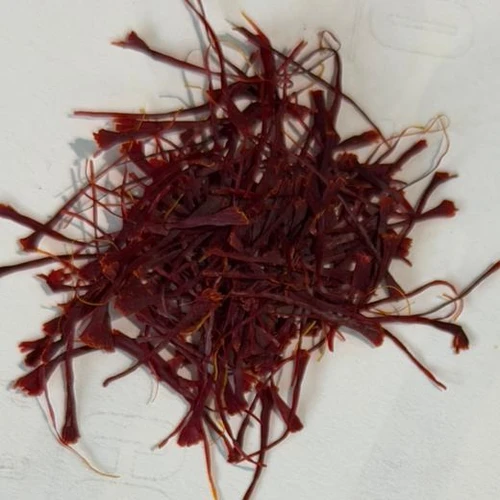
Kashmir Origin Vs Imported Saffron
How to identify the characteristics of this harvest
Zoom
Deenz Authentic Quality
- Grown in high-altitude Karewa plateaus of Pampore, Kashmir
- Rare and limited (< 5% of world harvest).
- Thicker, broader, trumpet-shaped heads, and less brittle.
- Dark maroon-crimson with exceptionally high crocin (deep golden-orange bleed in water).
- Strong, robust, deep herbal profile; 2–3 threads achieve full potency.
- Protected by a distinct GI (Geographical Indication) tag for authenticity.
 Zoom
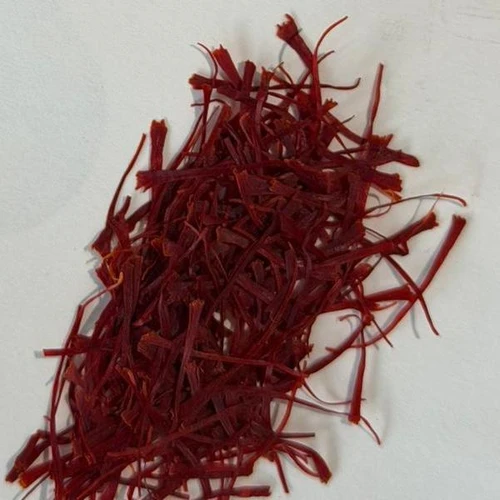
Market / Ordinary Quality
- Grown in arid plains of Iran or Spain.
- Abundant and mass-produced (~90% of global supply).
- Thinner, shorter, and more brittle threads.
- Bright crimson-red with moderate to high crocin
- Lighter, sweet, honey-hay floral aroma.
- Mild to moderate bitterness; requires 8–10 strands for comparable depth.
- Graded commercially (Super Negin, Sargol, Pushal, Mancha) without Indian GI status.
Product Specifications
Origin, variety, net weight & packaging details
Product Specifications
Origin, variety, net weight & packaging details
- Product
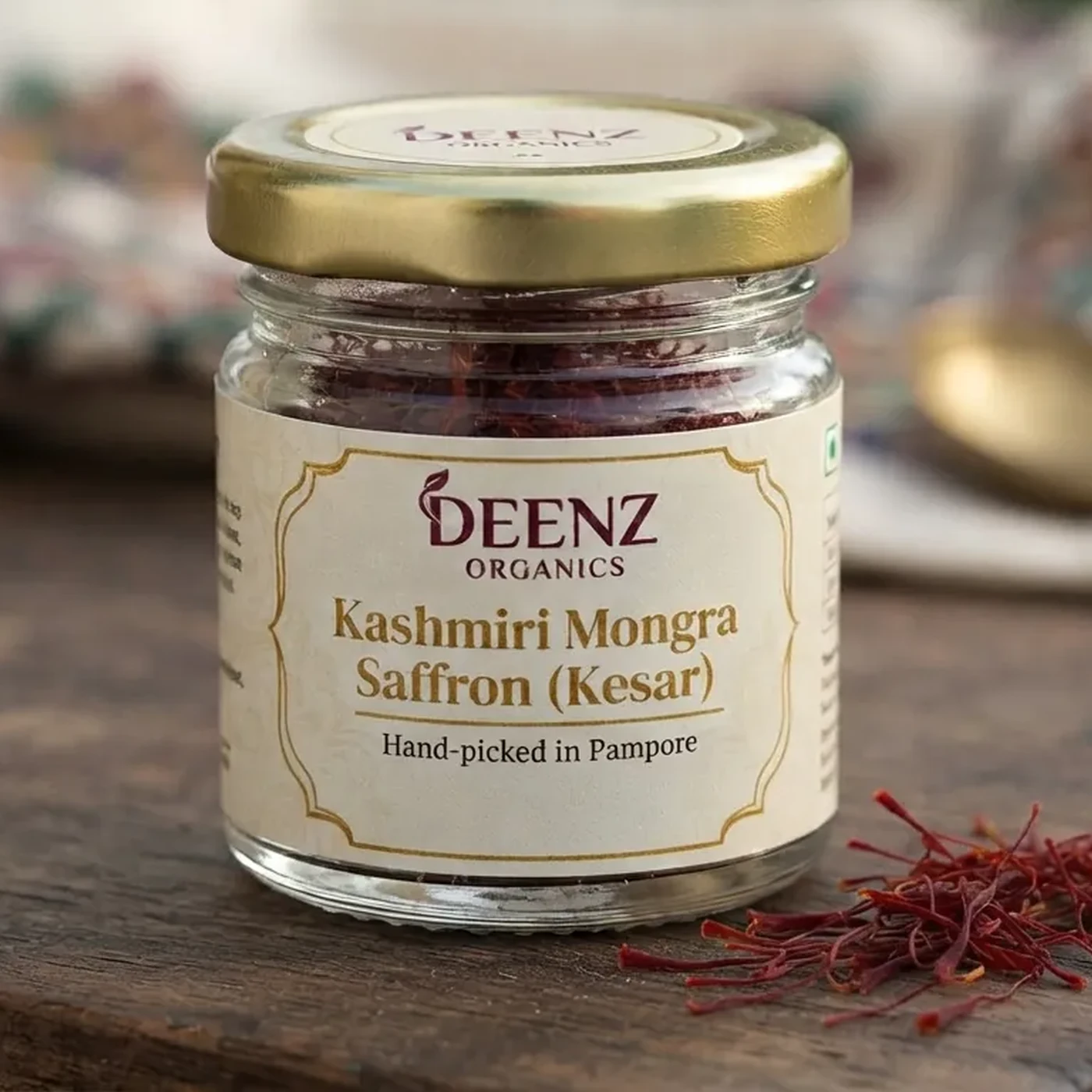
- Kashmiri Saffron (Kesar) Mongra Grade | Direct from Pampore, J&K
- Origin
- Pampore, Kashmir
- Variety / Grade
- Mongra - all-red stigma, no style
- Net Weight
- 1 g
- Packaging
- Airtight Food-Grade Glass Jar
- Country of Origin
- India
- Harvest
- Hand-picked, October-November
- Pack Sizes & Prices
- 1 g – ₹499 • 2 g – ₹999 • 5 g – ₹2,499
- Sold & Shipped By
- Deenz Organics, Wanpora, Kulgam, Jammu & Kashmir • FSSAI Lic. 21026233000090
Product details
Harvest description & origin details
Product details
Harvest description & origin details
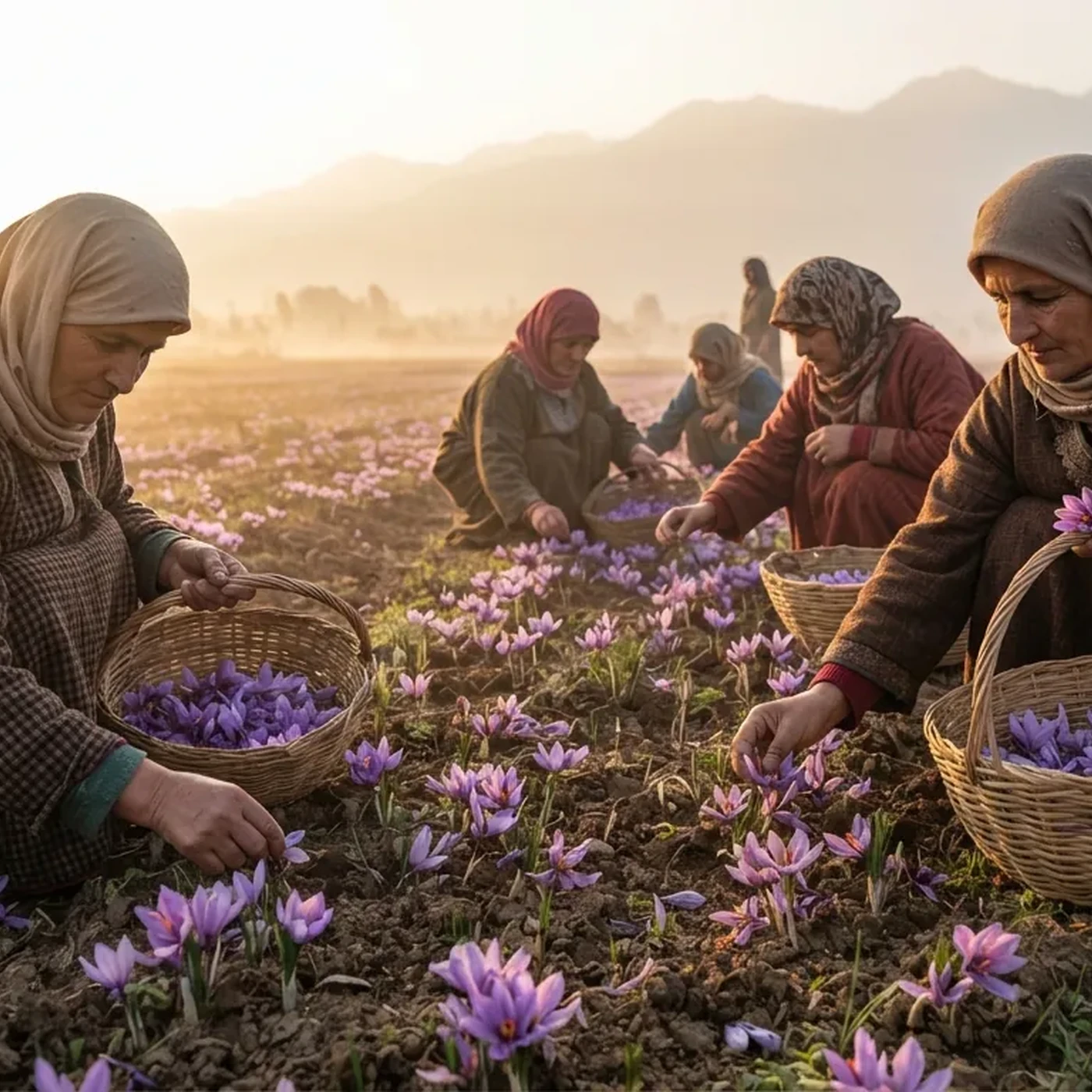
Our Mongra Saffron is hand-picked directly from the historic karewa plateau fields of Pampore, Kashmir — the world-renowned saffron capital protected under Geographical Indication (GI) registration. Saffron flowers bloom only once a year for a brief 2-to-3 week window in late autumn (October to November). Every single purple crocus flower is gently picked by hand at dawn before the sun opens the petals.
This product is genuine Grade-1 Mongra — the highest quality grade of Kashmiri saffron. In Mongra grade, our artisans carefully hand-separate only the deep crimson-red stigma threads, removing all yellow and white floral styles (which carry no coloring power or aroma and are discarded). This gives you 100% pure red filaments containing maximum natural crocin (color), safranal (fragrance), and picrocrocin (flavor). We never add artificial colors, oil coatings, moisture weight, or chemical fragrances.
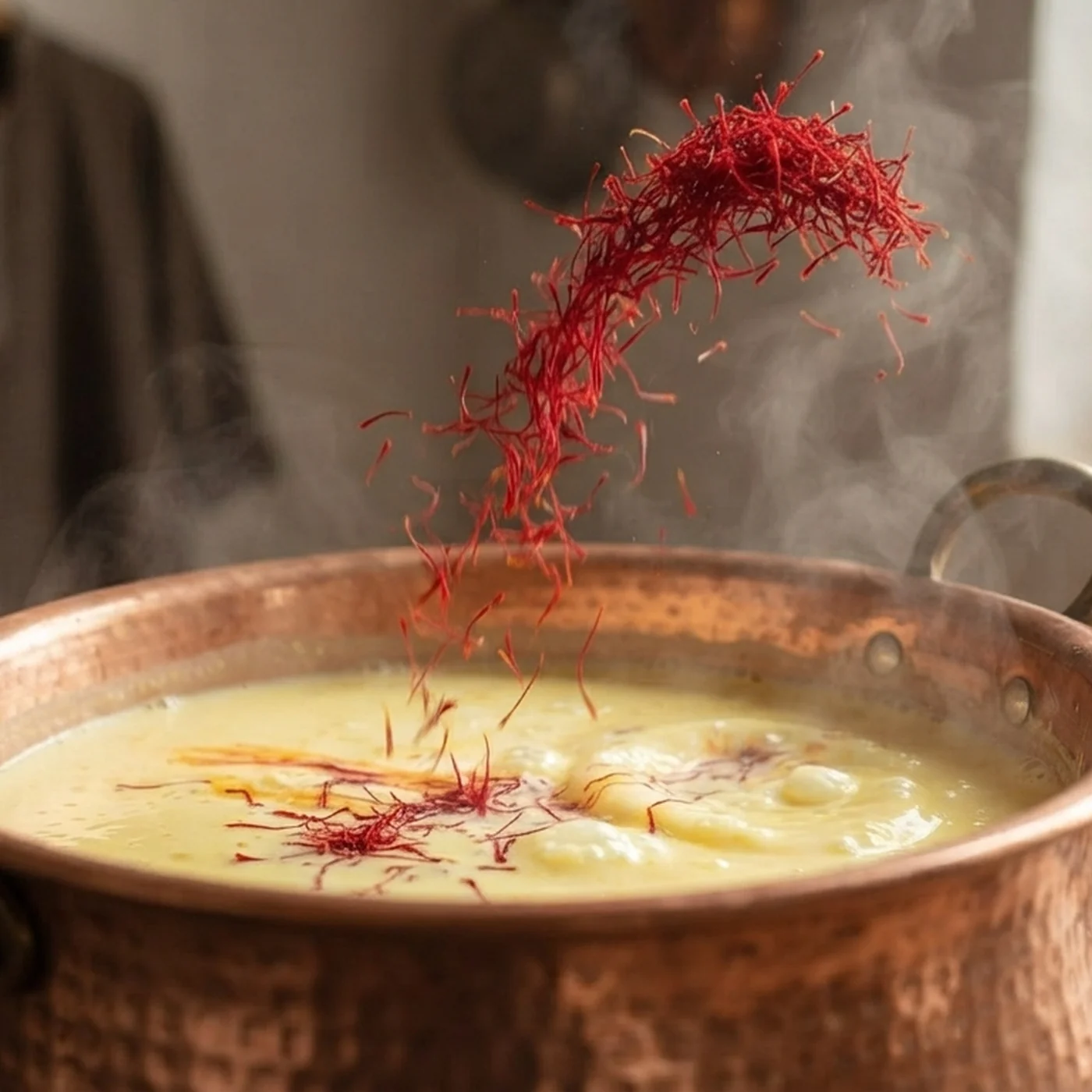
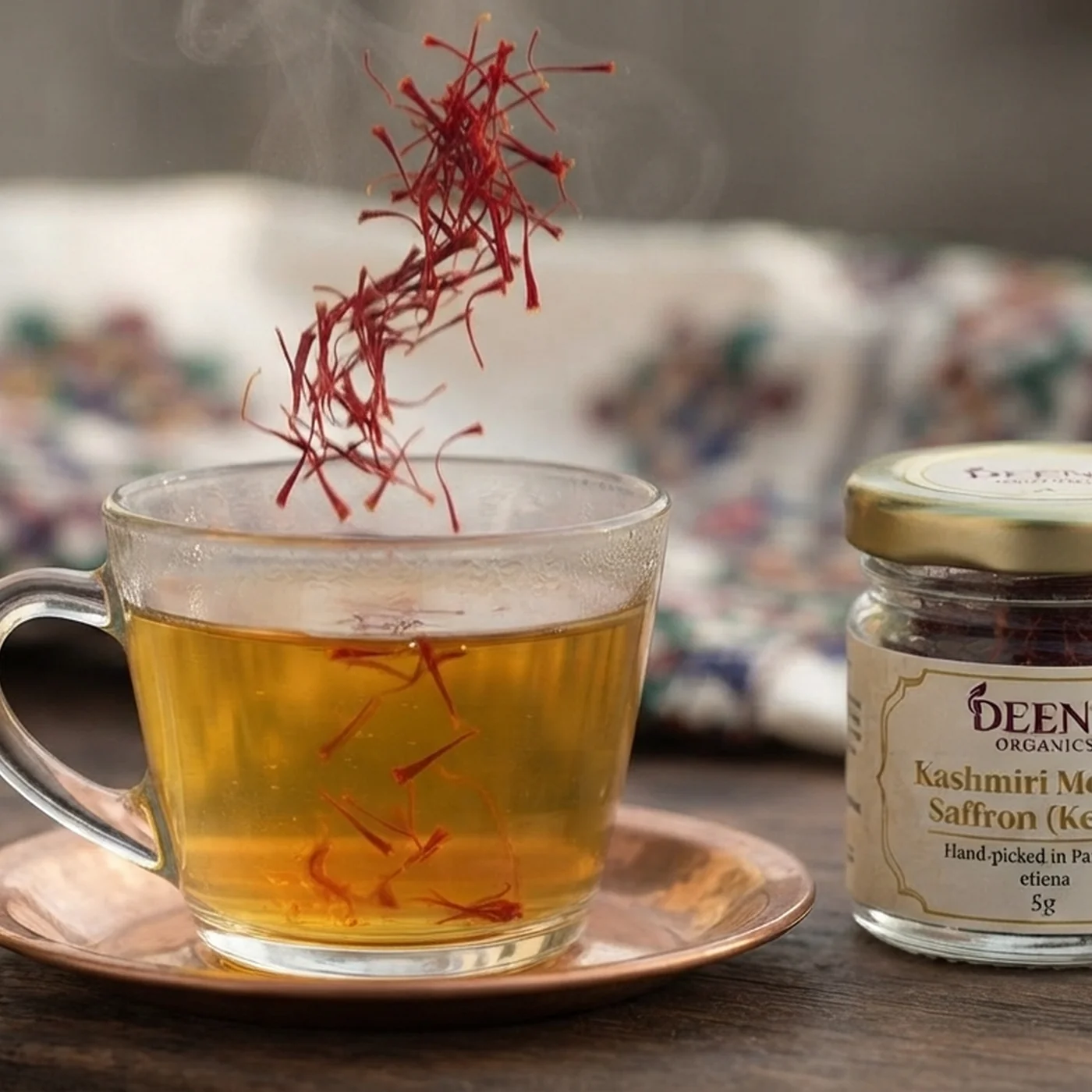
How to use: Real saffron is very potent and only 4 to 6 threads are needed for a whole dish. Crush the threads lightly between your clean fingertips and soak them in 2 tablespoons of warm water or milk for 15 to 20 minutes. The liquid will slowly turn into a rich golden-yellow hue with an authentic honey-hay aroma. Add this infused liquid along with the threads into Kashmiri Kahwa tea, biryani, pulao, kheer, badam milk, or festive sweets.
Storage tips: Keep saffron inside its sealed, airtight glass bottle or metal container. Store it in a dark, cool cupboard away from sunlight, heat, and stove steam. Never leave the container lid open as air and light cause saffron to lose its natural aroma and coloring strength over time.
Saffron from Pampore, the saffron town of Kashmir
Our saffron is hand-picked from the karewa fields of Pampore, the historic centre of saffron growing in Kashmir and the region behind the GI tag for Kashmir saffron. Flowers are picked at dawn during the short October-November harvest, and the red stigma threads are separated by hand the same day.
This is Mongra grade
Saffron threads have two parts - the deep red stigma and the pale yellow-white style. Mongra grade is only the red stigma, hand-separated from the style, which is floral waste and not included. This is why Mongra has stronger colour, aroma and flavour than Lacha (style still attached) or Zarda (mostly style) grade saffron.
Why real saffron costs what it does
It takes a very large number of hand-picked flowers to make a small amount of dried saffron, and the harvest lasts only a few weeks each year. This is exactly why genuine Kashmiri Mongra is priced in the few-hundred-rupees-per-gram range, and why saffron sold far below that is almost always adulterated with dye, other plant material or bulking agents, not a bargain.
Traditional use in Ayurveda and at home
Saffron has long been part of Ayurveda and Kashmiri home remedies, traditionally used in warm milk for general wellbeing, mood and sleep, and valued in skin care preparations. It is a traditional food and remedy, not a medicine, so please speak to a doctor before relying on it for any health condition, and especially during pregnancy.
An everyday part of Wazwan and Kahwa
In Kashmir, saffron goes into Kahwa, the traditional spiced tea, and into festive dishes served in Wazwan, along with kheer, pulao and sweets across Indian kitchens more broadly. A few threads are usually enough to colour and flavour a whole dish.
How to check it is real
Drop a few threads into warm water or milk. Real saffron releases its colour slowly, over 10-15 minutes, and the threads mostly hold their shape. If the water turns deep colour almost instantly or the threads fall apart, be cautious. Genuine saffron also has a distinct, slightly bitter-sweet, honey-hay aroma, not a sweet or chemical smell.
How we handle it at Deenz
We source our saffron only from Pampore, Kashmir, and we do not mix in saffron from outside the region or bulk it with style or colouring agents. Because it is a natural, hand-picked crop with a short harvest window, small variation in thread length and colour depth between packs is normal.
How to use
Crush 4 to 6 red threads and soak in 2 tablespoons of warm milk or water for 15 to 20 minutes before adding to Kahwa tea, biryani, kheer, or milk.
Storage Instructions
Store inside original airtight glass container in a dark, cool cupboard away from sunlight and moisture. Never keep open to air.
Questions and Answers
8 answered questions
Questions and Answers
8 answered questions
Is this Mongra / Lacha / Iranian Saffron ?
Why is your saffron priced much higher than saffron selling for ₹80–150 per gram online?
Why is Kashmiri saffron so expensive?
Is this really from Pampore, or just written on the label?
What's different from the Iranian saffron most sellers call "Kashmiri"?
Do you buy from farmers or a mandi?
Why should I trust that you actually source from Pampore, and not just claim it like everyone else?
Do you deliver only in India, or internationally as well?
Ratings and reviews
4.6 ★ based on 77 ratings
Ratings and reviews
4.6 ★ based on 77 ratings
No reviews found for this rating.
Try selecting another star rating or "All" to browse all reviews.
Bhagwan
Verified Buyer • Kanpur
Fresh Mongra kesar with rich crimson color. Tastes just like the traditional saffron we used in Kashmir.
12 Mar 2026
Aakash
Verified Buyer • Kolkata
Clean and unadulterated saffron strands. Glass jar packaging keeps the aroma intact.
12 Mar 2026
Nilesh
Verified Buyer • Ahmedabad
No yellow threads mixed at all. Pure deep red stigma. Deenz Organics delivers real quality.
11 Mar 2026
Sadashiv
Verified Buyer • Dhanbad, Jharkhand
Genuine saffron threads with good aroma. Price is slightly premium, but for genuine Kashmiri Mongra it is justified.
11 Mar 2026
Anuradha
Verified Buyer • Bengaluru
Fragrance is very authentic and sweet-earthy. Value for money for genuine Kashmiri produce.
10 Mar 2026
Verified Buyer Reviews Only
Go to My Account to Write a Review >